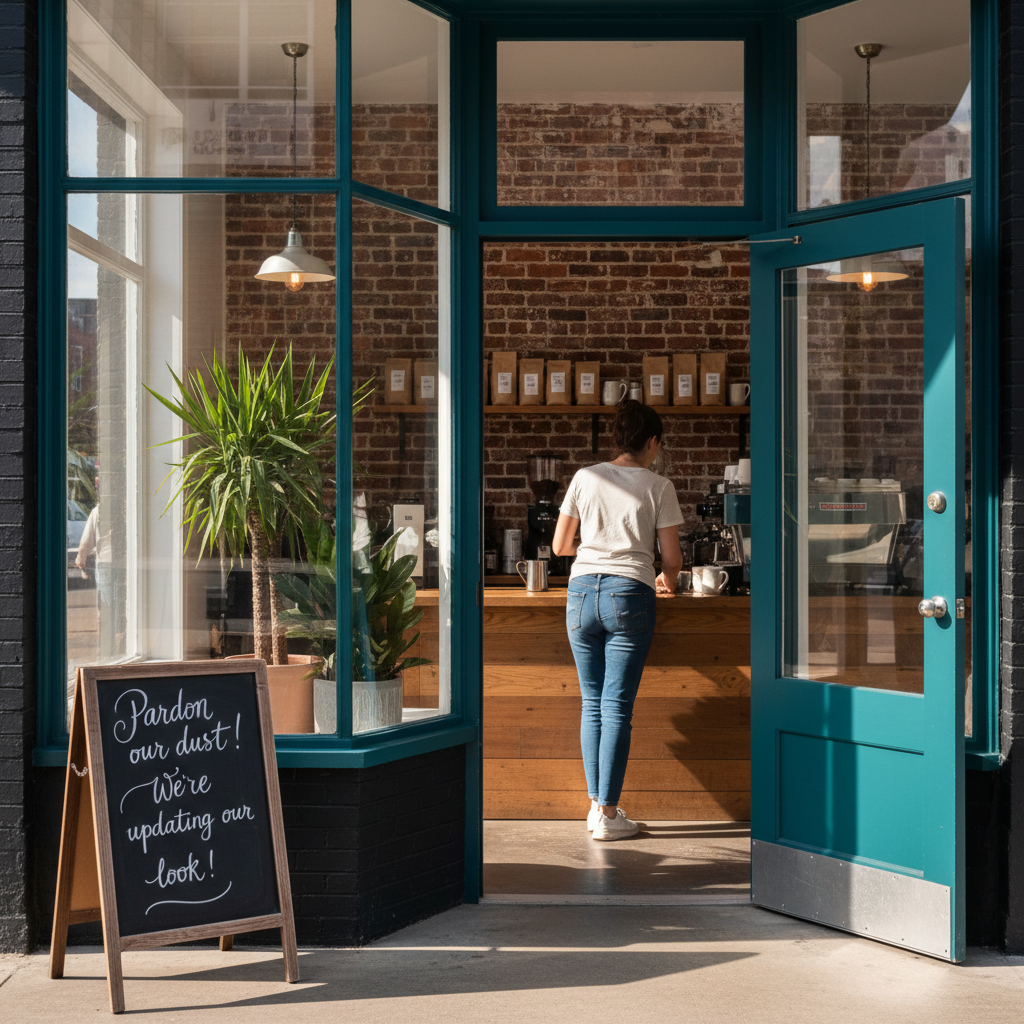
Rebrand Without Losing Customers: A Small Business Playbook
A practical, low-risk playbook for small businesses to update logos, voice, or storefronts without confusing or losing regular customers. Includes exact scripts, a rollout checklist, and a 6-week test plan.
6 min read
BrandZilla EditorialReviewed by marketing operators· Updated Aug 22, 2026· 6 min read
You want a refreshed brand — new logo, clearer voice, maybe a cleaner storefront — without scaring off the customers who already trust you.
Most small businesses try a big reveal, get mixed reactions, and then tighten their marketing for months. That costs revenue and morale. Rebranding doesn't have to be risky if you follow a staged, customer-first approach.
This playbook is tactical: exact steps, copy-paste scripts, a rollout checklist, and a measurable 6-week pilot you can run with one location or product. No vague theory — just what to do and when.
The core principle: change in small, visible steps
Large brands can flip everything at once because they're expected to move fast. Small businesses survive by keeping customers comfortable while improving clarity.
Use these three rules:
Keep familiarity where it matters (logo and service names are lower risk than how you talk to customers).
Make changes visible and explain them (don’t surprise regulars).
Pilot before you fully replace (test on one channel or one product for 4–6 weeks).
Reality check: Most small businesses post 3x then quit. Consistency beats creativity 9 times out of 10.
6-week rebrand pilot (exact timeline you can copy)
Week 0 — Prep (3 days)
Pick a single pilot: either one location, one hero product or one social channel.
Choose 3 measurable goals (e.g., weekly foot traffic, email opens, bookings) and note current baselines.
Prepare assets: a short explanation script, before/after visuals, and a small in-store sign.
Week 1 — Soft test (days 1–7)
Roll out the updated visual subtly (e.g., new logo on receipts, new headline on website homepage, or a redesigned menu item card).
Use the exact front-line script below with every customer.
Track reactions and any drop in key metrics daily.
Week 2–3 — Collect proof (days 8–21)
Ask 20 customers for quick feedback in-person or via a one-question SMS. Offer a small incentive (5% off next visit).
Post one behind-the-scenes social post explaining the reason for change.
Measure: did weekly visits move, stay even, or fall more than 10%?
Week 4 — Adjust (days 22–28)
If metrics are stable or improving, expand changes to two more touchpoints.
If metrics drop >10%, pause and iterate on messaging — not visuals.
Week 5–6 — Expand and announce (days 29–42)
Announce the larger change publicly with a clear customer-facing story.
Replace old assets where customers expect them (signage, uniforms, menus).
Continue measuring for two more weeks to confirm final trend.
Front-line staff script (copy-paste)
Use this with every customer during the pilot — it keeps things friendly and removes surprise.
"Hi! You might notice a small update around here — we refreshed our look to make things easier to read and order. Everything you love is the same; this just helps us serve you faster. If you have any thoughts, we’d love to hear them."
Quick win: Repurpose one customer review into a 3-post mini series this week.
Where businesses typically fail (and exact fixes)
Common mistake 1 — Starting with a big public reveal
Fix: Start small. Test one asset and one script for at least 4 weeks. Keep point-of-sale familiar — customers notice receipts and menus more than your font choice.
Common mistake 2 — Overwriting existing naming
Fix: Keep legacy names for a transition period and introduce the new name as an option: "Try our new ‘Morning Boost’ (formerly ‘House Espresso’)."
Common mistake 3 — No measurement plan
Fix: Pick 3 KPIs and track them daily. Example KPIs: daily walk-ins, email open rate, booking conversion. If one drops 10%+ for 7 days straight, halt the rollout and gather feedback.
Common mistake: Treating Instagram captions like tweets — context outperforms one-liners for local businesses.
Customer-facing messaging templates
Use these exact lines in email, on signs, and on social.
In-store sign (short):
"We’ve refreshed our look to serve you better. Same team, same favorites — new clarity. Tell us what you think!"
Email subject lines (A/B test these two):
We gave our menu a cleaner look (and a small surprise)
Same [Business Name], a clearer menu. See what changed
Social post copy (one-paragraph):
"We updated our look to help you order faster and find your favorites. Everything you love is staying the same — this just makes our menu and signs easier to read. Thanks for being part of the change."
Announcement post (longer):
Lead with what stays the same, then explain why: staff, core offerings, hours. End with an invite for feedback and a small incentive (e.g., 10% off in the first week after the wider rollout).
Measuring customer retention during a rebrand
Track these three things daily during the pilot: sales volume, repeat customer rate, and direct customer feedback.
Sales volume: compare rolling 7-day averages to the baseline.
Repeat customer rate: count purchases from customers who bought within the prior 30 days.
Direct feedback: note objections and common praise. Categorize each comment as "confusion," "neutral," or "positive." If confusion > 20% of responses, pause.
Mini-example (realistic and repeatable):
Lucy’s Laundromat (neighborhood store, 2 full-time staff) changed their storefront color and updated the logo only on the door and receipts for a 6-week pilot. Baseline: 60 weekly drop-off customers. After 6 weeks: 72 weekly drop-offs (+20%) and +8 email signups from the new in-store sign. They expanded the visual across the shop in week 5 and kept the same messaging. Cost: $450 for printing and a small social boost. Lesson: small, explained changes moved behavior, not confusion.
Local business example: A bakery in Brooklyn moved from 2 walk-ins/day to 11 by posting one behind-the-counter reel each morning.
Rollout checklist (what to do, in order)
Pick pilot channel or product and set baselines.
Finalize one customer-facing sentence (write it once and use it everywhere).
Update one physical touchpoint (menu, receipt, or door) and teach staff the script.
Collect 20 customer feedback pieces in weeks 2–3.
Decide: expand, iterate, or pause.
If expanding: replace other assets over 2 weeks and announce publicly.
When to rebrand everything at once
If you’re changing ownership, changing core services, or correcting a reputation problem, a fuller rebrand can make sense. Even then, use the same customer-first rules: explain the change, keep familiar elements where possible, and measure closely for the first 30 days.
Steal this template: "We help [audience] [outcome] without [pain]. Here's how →"
Practical shortcut: You can build this system manually — or use BrandZilla to stay consistent without hiring a social media manager.
Final pairing: internal alignment + visible comfort
A successful rebrand for a small business is half internal and half visible comfort. Train staff to use the single sentence, put a small sign where customers look, and measure for 6 weeks before you call it finished.
If you want a basic rule of thumb: test one thing for one month, expand the next month, and announce in month three. That pacing keeps customers confident and gives you time to fix surprises.
If you’d rather skip the DIY approach, consider a simple system (or partner) that helps you keep the cadence and measurement tight.
Short next step: pick one visible touchpoint today (receipts, menu, or door) and write the one-sentence explanation you'll use with every customer.
The real objections — answered straight, no fluff.
BrandZilla Editorial Team
SMB MarketingContent Strategy
Practical playbooks written and reviewed by people who actually run content programs for small and local businesses — not generic AI output. Every guide is pressure-tested against what real operators do on Instagram, Facebook, LinkedIn and Google.
Used by 1,000+ businessesLast updated Aug 22, 20266 min read
Get weekly content ideas for your business
Join business owners getting practical, ready-to-post BrandZilla content prompts every week. No spam.