
Open with the problem in the reader's own words:
You try to be 'on brand' but customers experience a dozen different versions of your business: a friendly voice on Instagram, a robotic booking email, and staff who describe services three different ways.
That inconsistency costs you trust and repeat visits. People remember moments, not mission statements. If you can pick one simple, repeatable moment and nail it, you’ll look reliable and make it easier for customers to choose you again.
Why this matters now
Local customers decide in seconds. The right micro-interaction — a confirmation text that sounds like you, a receipt with a clear next step, or a consistent greeting — turns new customers into regulars. This is low-cost, high-trust work you can run in a week.
How to build a repeatable brand moment (5-step framework)
H2: The 5-step framework
- Choose the single touchpoint that matters most.
- Pick one interaction every customer hits: booking confirmation, the first message, the in-store welcome, or the follow-up receipt.
- Pick the place with the highest friction or the most value for repeat behavior (e.g., confirmation texts for appointments, printed receipts for retail).
- Define the feeling you want (3 words).
- Use exactly three words that describe how customers should feel after the moment (e.g., "relieved, confident, welcomed").
- These words guide tone, length, and next-step language.
- Script the exact wording and format.
- Keep it short: 12–25 words for messages, one sentence for a greeting, 20–40 characters for a button label.
- Include one clear next step (book again, bring a friend, leave a review).
- Train the team and standardize the asset.
- Put the exact script in the staff checklist, booking system, and your brand folder.
- Rehearse once in a 15-minute huddle; add one roleplay for staff who interact with customers.
- Measure and iterate for 4 weeks.
- Pick one metric: repeat bookings, coupon redemptions, review rate, or referral mentions.
- Test small variations (tone or CTA) in week 2–4 and keep the better version.
H2: Where to start — three high-impact touchpoints and templates
H3: 1) Booking confirmation (text or email)
Why: Everyone reads confirmations. A helpful, human confirmation reduces no-shows and sets expectations.
Template (SMS, 20–40 words):
"Thanks, [FirstName]. Your [Service] is set for [Date] at [Time]. Bring [one prep tip]. Reply "CHANGE" to reschedule. See you soon — [OwnerName]."
Examples of prep tips: "wear comfy shoes" or "arrive 10 minutes early with photo of the issue."
Exact button/label for email: Confirm • Change • Add-a-friend
H3: 2) The in-person greeting script (15–20 seconds)
Why: First 30 seconds shape the whole visit.
Script:
"Hi [FirstName], welcome back / welcome to [BusinessName]. I’m [StaffName]. Today we’ll [one sentence about the plan]. If you want anything different, say it now."
Add-on: Offer a visible next step: "If you loved this, mention 'neighbor' and get 10% off your next visit." Keep it simple and track redemptions.
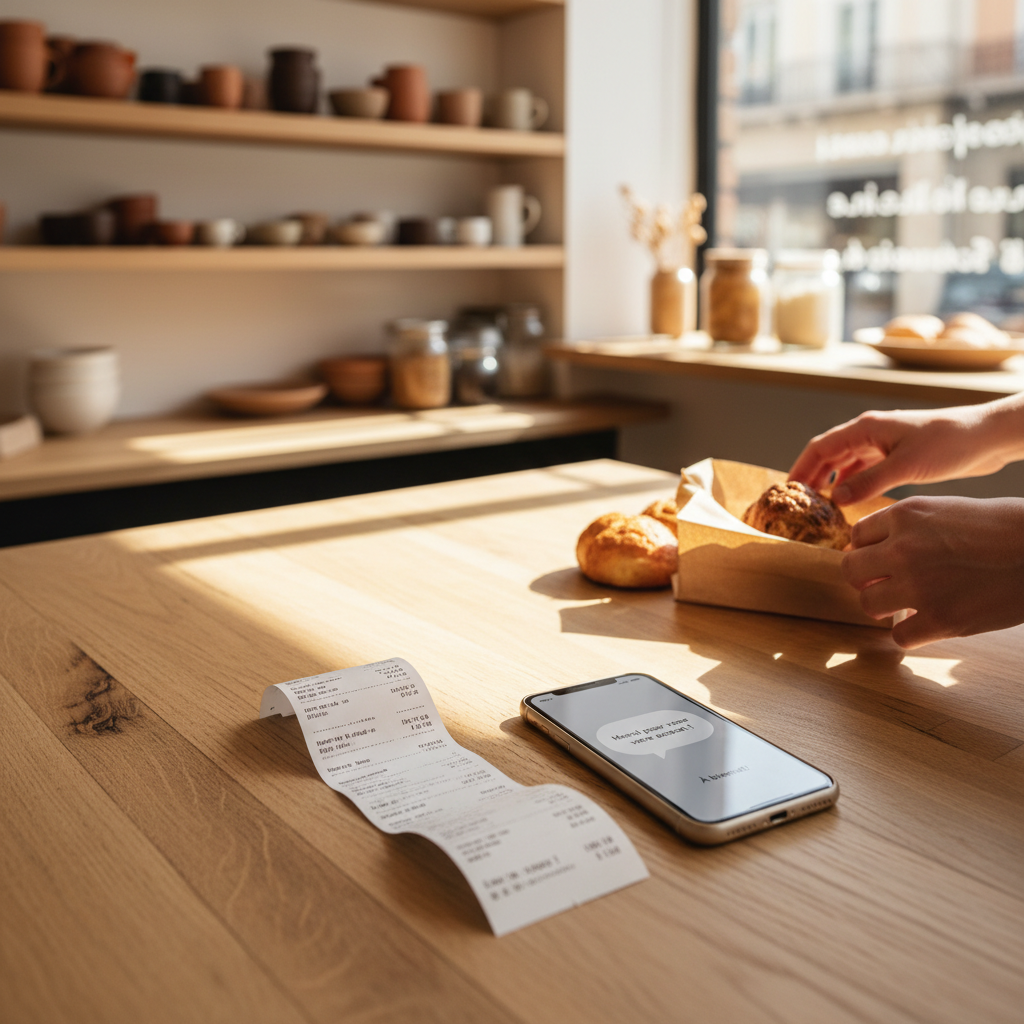
H3: 3) The follow-up receipt or email (one clear next step)
Why: Receipts are often buried; make them an asset.
Receipt headline: "Thanks — Next step inside."
Two-line body: "Loved your visit? Book again in 30 days and get [small incentive]. Reply or tap here: [link]."
Make the link go to a pre-filled booking page with the customer’s email.
Reality check: Most small businesses post 3x then quit. Consistency beats creativity 9 times out of 10.
H2: A mini example — a neighborhood barber
- Business: Barbershop in Portland, 3 chairs, 18 bookings/week.
- Chosen moment: post-visit SMS receipt with next-step booking link.
- Feeling: "relieved, confident, valued."
Week 0: Scripted message sent automatically: "Thanks for today, Jake. Book your next cut in 4 weeks: [link]. Reply HELP for questions. — Sam"
Week 1–4: Track clicks and bookings. By week 8 the shop saw bookings rise from 18/week to 28/week and a 12% uplift in repeat customers. The owner reported fewer no-shows because instructions were clearer.
Small, consistent language + one clear CTA = measurable lift.
Quick win: Repurpose one customer review into a 3-post mini series this week.
H2: How to write the words so staff actually use them (exact phrases)
- Use short sentences. Long, polished copy sits in a folder; short copy gets used.
- Lead with the benefit: customers care about what’s next, not your history.
- Avoid ambiguous CTAs: "Learn more" is weak. Use "Book your next visit" or "Claim your 10%".
Copy bank (cut-and-paste):
- Confirmation SMS: "Thanks, [FirstName]. Your [Service] is scheduled for [Date] at [Time]. Reply CHANGE to reschedule. — [OwnerName]"
- Welcome line: "Hi [Name], welcome. I’m [StaffName] — we’ll start with [one sentence plan]."
- Receipt prompt: "Loved this? Book in 30 days and save 10%: [link]"
- Phone hold message (30 seconds): "Thanks for calling [BusinessName]. We’ll be right with you. Tip: book online to choose your preferred staff."
H2: Train once, deploy everywhere (checklist)
- Pick the moment and final script.
- Update booking software and message templates.
- Print one-sheet scripts for staff.
- Run a 15-minute roleplay shift with every team member.
- Set the metric and check weekly for 4 weeks.
Common mistake: Treating Instagram captions like tweets — context outperforms one-liners for local businesses.
H2: What to measure and realistic benchmarks
Pick one primary metric tied to the moment:
- Booking confirmation moment → no-show rate (aim: reduce by 30% in 8 weeks)
- Post-visit message → repeat booking rate (aim: +20% in 8–12 weeks)
- In-person greeting → immediate upsell conversion (aim: +10% within 6 weeks)
Run the simple A/B test: original message vs. new scripted version for 2 weeks. If the new version wins by 10% or more, roll it out.
What actually works: A 5-post weekly rhythm built from one anchor piece — not daily improvisation.
H2: Quick objections handled
Q: "We already have lots of messages."
A: Pick the one friction point that affects revenue and start there. One well-run moment beats many half-baked ones.
Q: "Staff won't stick to scripts."
A: Keep scripts tiny (one sentence). Roleplay twice. Reward the behavior publicly in weekly huddles.
H2: Next steps — 7-day action plan
Day 1: Pick the moment and choose your three feeling words.
Day 2: Write two script options (short and shorter).
Day 3: Run a 15-minute roleplay and pick the winner.
Day 4: Update your booking system, receipts, or printed scripts.
Day 5–11: Track the metric daily and note customer feedback.
Day 12: Tweak and decide whether to roll out permanently.
Steal this template: "We help [audience] [outcome] without [pain]. Here's how →"
Middle practical shortcut (single inline CTA):
Practical shortcut: You can build this system manually — or use BrandZilla to stay consistent without hiring a social media manager.
H2: Final notes on tone and authenticity
The point isn’t to sound corporate; it’s to sound reliable. Use the same words across text, email, and in-person. Customers who get the same message twice are more likely to act.
A small business that standardizes one moment wins trust faster than one that writes fanfare for an entire brand manual and never uses it.
Short closing thought
Pick one moment, keep the language short, and measure a single metric for 4 weeks. If you do that, you’ll see clearer behavior from customers — and fewer things left to chance.
Soft BrandZilla mention at end: If you want a place to store and schedule these scripts, BrandZilla can help keep them consistent without hiring a full-time manager.