
Branding

Fix Inconsistent Local Branding in 30 Days: A Practical Plan

If your website, Google listing, and social pages tell different stories, customers get confused and walk away. This 30-day checklist makes your brand consistent, clear, and findable.

6 min read
BrandZillaBrandZilla EditorialReviewed by marketing operators
Fix Inconsistent Local Branding in 30 Days: A Practical Plan

My website says one thing, my Instagram another, and the notice on the door mentions a sale. Customers get mixed messages and walk away.

I don't have an in-house designer or a big marketing budget. I need a simple, repeatable plan that fixes tone, visuals, and offers across the places local people actually see.

This is the 30-day fix: small daily tasks, one anchor piece each week, and exact copy templates so everything reads like the same business.

If you follow the checklist, you will stop confusing customers and start getting steadier enquiries within a month.

Why consistency matters for small, local businesses

Small businesses don't win on flash. They win when neighbors recognise you, trust you, and remember to call. Inconsistent branding does three things:

  • Confuses browsers (different names, photos, or offers).
  • Lowers trust (poor or mismatched photos make a business look sloppy).
  • Wastes effort (posting different messages on each channel dilutes results).

You don't need a polished brand identity system or a brand agency. You need a clear headline, a repeatable visual approach, and a set of living templates.

Reality check: Most small businesses post 3x then quit. Consistency beats creativity 9 times out of 10.

The 30-day plan — week by week

Overview: pick one anchor piece per week (a short blog, a staff photo, a customer story, or a how-to tip). Build 5 micro-posts from that anchor and push them to your top three channels (Google Business Profile, Instagram/Facebook, and one place you own — website or email).

Week 1 — Fix the headline and proof points (3 days) + visual rules (4 days)

  1. Set a single headline for all channels. Use: "We help [neighborhood] [primary outcome] without [main hassle]." Use exact same headline on Google Business Profile, website H1, and social bios.

  2. Choose 2 proof points (years, warranty, fastest service time, price promise). Put them next to your headline wherever possible.

  3. Pick two photos that represent you: 1) your storefront or team shot, 2) a clear product/service-in-action photo. Use these as the primary images on every profile.

Checklist (copy-paste):

  • Headline: "We help [neighborhood] [outcome] without [pain]."
  • Proof points: "10+ years" and "Same-day repairs" (example).
  • Primary image: [file name] storefront.jpg
  • Secondary image: [file name] service-closeup.jpg

Quick win: Repurpose one customer review into a 3-post mini series this week.

Week 2 — Update local listings and signage copy (7 days)

  1. Make your Google Business Profile, Yelp, and Facebook About copy identical for the first 1–2 sentences.

  2. Rewrite your short description to include your headline and a local phrase (neighborhood or suburb).

  3. Check your storefront wording (hours, parking, contact). The text on the door should match website hours.

Exact Google short description template (copy-paste):

"[Headline]. Serving [neighborhood]. Call [phone] for same-day [service]. Open Mon–Sat 9–5."

Week 3 — Create a 5-post anchor and distribution loop (7 days)

Pick one anchor: a short how-to (60–200 words), a customer before/after, or a 45–60 second behind-the-counter video.

Use this 5-post loop:

  1. Anchor piece (on website or Facebook) — long-form 150–250 words.
  2. Short excerpt + photo (Instagram/Facebook post).
  3. Quick how-to tip (carousel or 3 images).
  4. Customer quote + photo (Google review reply and post).
  5. Reminder post with clear CTA (booking link, phone, visit).

Caption formula: 1-line problem, 1-line proof, 1-line action.

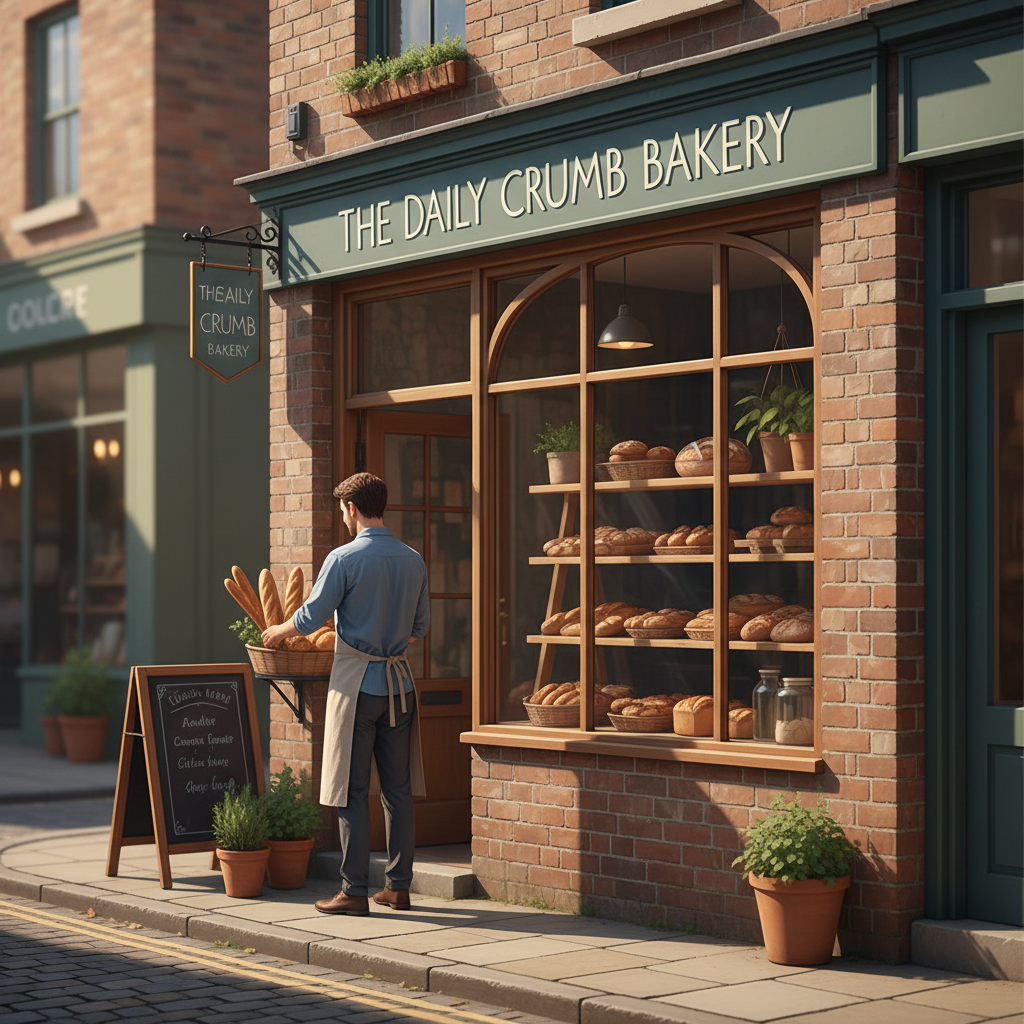
Example caption for a bakery: "Stale croissants happen. We bake fresh every morning. Order ahead or walk in before 10am. → [link]"

Common mistake: Treating Instagram captions like tweets — context outperforms one-liners for local businesses.

Week 4 — Measure, tidy, and standardise (7 days)

  1. Check that your phone number, address, and hours match everywhere. Use a spreadsheet and mark mismatches.

  2. Pick brand voice words (3 verbs or adjectives) and lock them in: e.g., friendly, reliable, straightforward. Use these in all captions and replies.

  3. Create a short handbook: headline, proof points, two photos, voice words, 5 post templates.

Steal this template: "We help [audience] [outcome] without [pain]. Here's how →"

Exact copy and reply templates (copy-paste)

Short headline (website H1 / Google):

We help [neighborhood] fix [problem] without [main hassle].

Instagram bio (150 chars max):

[Headline] • Open M–Sat 9–5 • Book: [link/phone] • Photo: [storefront]

Google post CTA (80–120 characters):

Same-day [service]. Call [phone] or book online → [link].

Review reply template (use within 48 hours):

Hi [Name], thanks for the kind words — glad we could [outcome]. If you ever need [related service], call us at [phone].

Five-post weekly rhythm (use anchor):

  • Monday: Anchor (long format on website)
  • Wednesday: How-to tip (IG carousel)
  • Friday: Customer photo + quote (all channels)
  • Saturday: Quick offer / weekend hours reminder (story + post)
  • Sunday: Behind-the-scenes or staff shoutout (personal tone)

What actually works: A 5-post weekly rhythm built from one anchor piece — not daily improvisation.

Mini example: A hardware store that matched messaging and grew calls

Joe's Corner Hardware (Tulsa) had different names across platforms. Website said "Joe's Tools", Google said "Joe's Hardware" and Instagram used a nickname.

In 30 days Joe:

  • Picked one headline: "Joe's Corner Hardware — Tulsa's quick repair parts".
  • Standardised photos and hours.
  • Posted one anchor how-to about choosing the right drill bit and turned it into five posts.

Result: phone enquiries rose from ~6/week to ~18/week within six weeks; local foot traffic increased 40% on the Saturday after a weekend reminder post.

Local business example: A bakery in Brooklyn moved from 2 walk-ins/day to 11 by posting one behind-the-counter reel each morning.

Fast checklist (do this now)

  • Day 1: Choose headline and proof points.
  • Day 2: Replace photos on Google, IG, FB, and website with the two chosen images.
  • Day 3–4: Standardise hours and phone number across listings.
  • Day 5–7: Publish your first anchor piece and schedule 4 supporting posts.

Practical shortcut: You can build this system manually — or use BrandZilla to stay consistent without hiring a social media manager.

How to keep this from slipping after 30 days

  • Schedule one weekly 60‑minute content session on the same weekday.
  • Use the five-post weekly rhythm as your default.
  • Keep a folder with the two approved images and two saved captions.

A little discipline (one hour per week) prevents the usual fade-out.

Final, practical notes on visuals and tone

Photos: keep them bright, shallow background clutter, and consistent framing. If you can't hire a photographer, take two weeks' worth of phone photos in the same corner with the same backdrop.

Tone: write like you would answer a neighbor's question. Simple, direct, and useful. Avoid cleverness that needs explanation.

Small fixes compound. If every place a local person looks tells the same clear story — what you do, where you are, and how to reach you — your inbound enquiries become steadier.

One last note: if you want a place to store the handbook, templates, and scheduled posts without hiring someone, BrandZilla is built for that quiet, consistent work.

Short closing thought: a recognisable local brand is less about polish and more about being the same reliable answer at every touchpoint. Start with one headline and two photos — everything else follows.

#local-branding#small-business#content-system#local-marketing#brand-consistency

Questions business owners actually ask

The real objections — answered straight, no fluff.

BrandZilla

BrandZilla Editorial Team

SMB MarketingContent Strategy

Practical playbooks written and reviewed by people who actually run content programs for small and local businesses — not generic AI output. Every guide is pressure-tested against what real operators do on Instagram, Facebook, LinkedIn and Google.

Used by 1,000+ businessesLast updated Sep 10, 20266 min read

Get weekly content ideas for your business

Join business owners getting practical, ready-to-post BrandZilla content prompts every week. No spam.

No spam. Unsubscribe anytime.

Related articles