Hyperlocal Content That Actually Brings Neighbors Into Your Shop
If your social posts feel like broadcast noise, you need a hyperlocal plan. This guide shows a six-week, repeatable system to turn local posts into real foot traffic and bookings.
7 min read
BrandZilla EditorialReviewed by marketing operators· Updated Aug 18, 2026· 7 min read
Start with the exact problem most local owners say: "I post occasionally, but no one nearby shows up." Or: "My posts get likes, but they don't bring calls or foot traffic." Short attention, long to-do lists, inconsistent posting — that's why neighborhood customers never notice you.
You don't need more creativity. You need better targeting and a rhythm that neighbours expect. This is a practical, repeatable system for neighborhood-focused content that gets people off the couch and through your door.
The core idea: own a small radius, not the whole internet
Big-brand content tries to be everywhere. Small businesses win by being unmistakably local for a small group of people: a block, an apartment building, or a nearby office park.
Pick a radius (300–1,200 meters is a good rule). Create posts that a nearby person would find useful, familiar, or brag-about worthy. Repeat the same five themes each week so neighbours learn what you show up for.
Reality check: Most small businesses post 3x then quit. Consistency beats creativity 9 times out of 10.
The 6-week system (what to do, week by week)
This isn't a content sprint. It's a 6-week loop you can repeat. Each week has a clear purpose and 3–5 short posts. Do the planning for six weeks in one 90-minute session.
Week 1 — Introduce the neighborhood
Post 1: Map post. Show where you sit in relation to obvious local landmarks.
Post 2: Local shoutout. Feature another small business (coffee shop, laundromat) within the radius.
Post 3: Door-opener offer. A simple low-friction offer (free sample, $5 off for neighbours) with a two-week expiry.
Week 2 — Tell a neighbour story
Post 1: Customer mini-profile (photo + 2-sentence quote).
Post 2: Behind-the-scenes of a neighborhood routine (how you prep for the morning rush).
Post 3: Local FAQ answer (short video or caption) addressing a common neighbor question.
Week 3 — Solve a small local pain
Post 1: Quick tip related to your service (how to remove coffee stains for a dry cleaner, 15s clip).
Post 2: Before/after photo of a local job or product.
Post 3: Reminder about your neighbor offer and deadline.
Week 4 — Calendar & events
Post 1: What to expect this weekend (local events, late hours).
Post 2: Invite to a micro-event (coffee tasting, 20-minute demo) targeted at nearby residents.
Post 3: Testimonial from someone who came because of your last micro-event.
Week 5 — Value + social proof
Post 1: One clear customer review framed for neighbours.
Post 2: Staff introduction — where they live or why they love the area.
Post 3: Quick how-to or myth-busting tip.
Week 6 — Wrap, measure, repeat
Post 1: Share the results from your offer ("11 neighbors used our sample last week—thank you!").
Post 2: Ask a single question to start conversations ("Which nearby park should we set up pop-up next month?").
Post 3: Announcement of next 6-week theme.
Each week should include at least one post explicitly framed for people who live within your chosen radius (use the words: "neighbors", "around the corner", the street names, or local landmarks).
Quick win: Repurpose one customer review into a 3-post mini series this week.
How to write captions that actually move people
Keep captions short, local, and action-oriented. Use this 3-line formula for neighborhood posts.
Local hook (5–10 words): mention street, block, or building.
Value line (one sentence): what they get or learn.
Call to action (one short line): a clear next step.
Steal these exact captions and swap the details:
Map post: "We’re on the corner of 5th & Maple — open 8–6. Pop in today for a free sample (neighbors only) — quick 2-min try."
Shoutout post: "Shoutout to Maple Cleaners two doors down — pick up your laundry and show this post to get 10% off a coffee."
Customer mini-profile: "Meet Ana from Building B — comes here every Thursday for our blueberry muffins. Her tip: ‘Try them warmed.’"
Exact call-to-action phrasing that works for local posts:
"Drop by before 3 pm and say ‘neighbor’ for a sample."
"Book a 15-min walk-in slot — link in bio — limited to next 48 hours."
"Tell us which block we should visit next and we’ll bring free samples."
Common mistake: Treating Instagram captions like tweets — context outperforms one-liners for local businesses.
Visuals and assets: shoot once, use many
Make a 30-minute content loop you can repeat. Here’s the checklist for a single shoot:
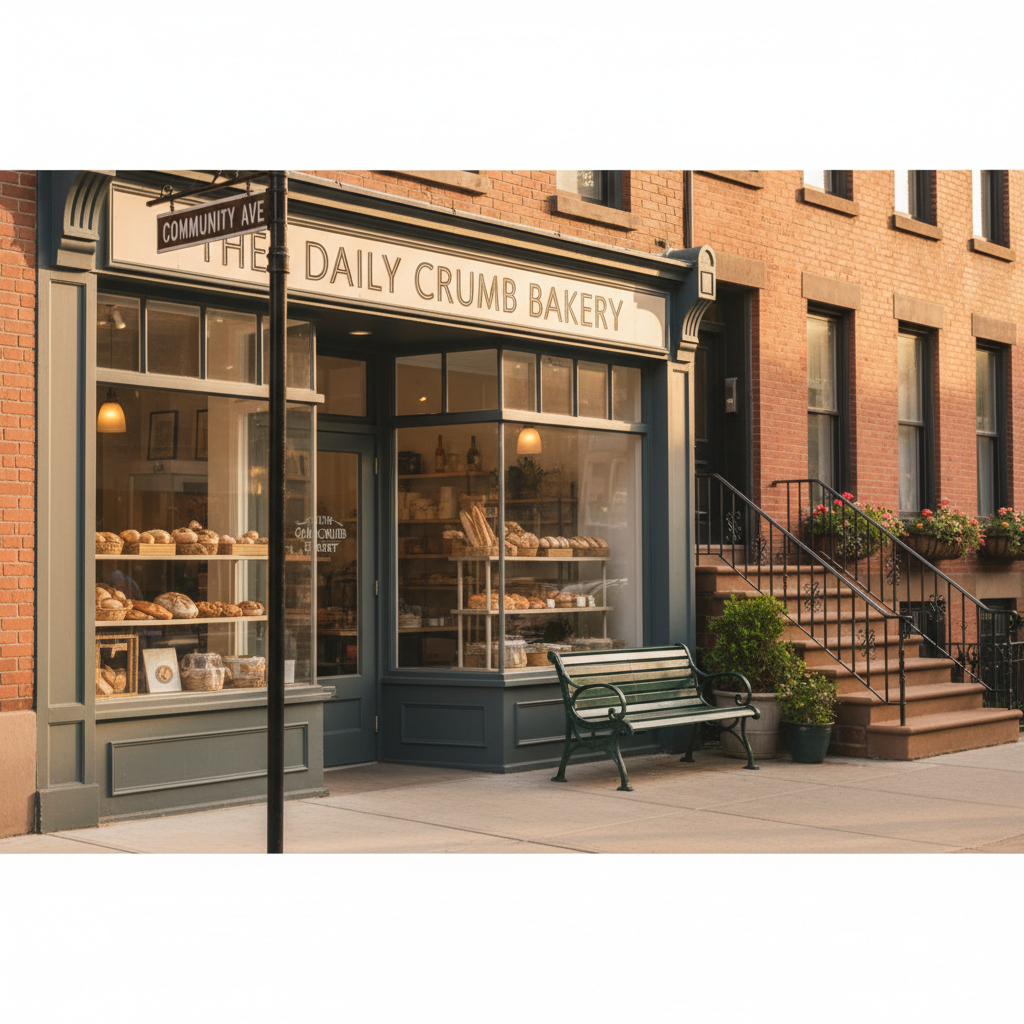
1 wide shot of the storefront with a visible street name.
3 close shots: product, staff, interior detail.
2 short clips (6–15s): behind-the-counter routine, a happy customer leaving.
Use those assets across a week: one wide shot for the map post, a close shot for a product feature, a clip for a tip, etc.
Mini-schedule for reuse: each asset should appear 2–3 times during the 6-week cycle with different captions.
A mini-example that works (real-feeling)
Local example: "Green Bean Bakery" — a 7-person shop on a residential block in Denver.
Radius: 600 meters (apartment-heavy).
Offer: Free mini-muffin for neighbours who say “Hello Neighbor” — valid first two weeks.
Execution: 90-minute shoot on Monday; six weeks of posts following the system above.
Result after 6 weeks: 11 new regulars and 72 walk-ins mentioning the offer. Owner reports a 22% bump in morning sales during promotion weeks, two new regulars from a nearby office building, and 18 Instagram DMs asking about hours.
Local business example: A bakery in Brooklyn moved from 2 walk-ins/day to 11 by posting one behind-the-counter reel each morning.
Distribution: where to post and why
Prioritize channels where neighbours already live:
Instagram (feed + stories): best for visuals and quick updates.
Facebook neighborhood groups and Nextdoor: great for direct local conversation.
Google Business Profile posts: shows up in local search and maps.
Printed table cards or door flyers for high-density blocks.
Posting cadence (minimal viable): 3–5 social posts per week, one GBP post every two weeks, one small print run per six-week cycle.
How to measure local impact (practical metrics)
Track simple numbers — no vanity metrics.
Number of walk-ins or calls that reference your post or offer.
Redemption count on neighborhood offers.
DMs or comments that mention a street or building.
Google Business clicks to directions.
At the end of six weeks, compare the average daily walk-ins and morning sales vs the six weeks prior. Aim for a 10–20% lift as an early signal the plan works.
What actually works: A 5-post weekly rhythm built from one anchor piece — not daily improvisation.
Scripts and micro-scripts you can use today
Use these exact lines for staff and responses.
In-store sign: "Neighbors: show this post for a free mini-sample through [date]."
Staff reply to DM asking about the offer: "Thanks for checking — we’re at 123 Maple. Say ‘Hello Neighbor’ at the counter and we’ll hand you a sample. Open 8–6 daily."
Facebook group intro post: "Hi neighbors — new to the block! We’re Green Bean Bakery at 123 Maple. Free mini-sample this Saturday 9–11 for folks who live nearby. Stop by!"
Steal this template: "We help [audience] [outcome] without [pain]. Here's how →"
Practical shortcuts and time-saving notes
Batch the visual shoot once every six weeks.
Use templates for captions — change the local hook and offer only.
Track redemption with a simple paper tally or a Google Sheet column called 'Offer Source'.
Practical shortcut: You can build this system manually — or use BrandZilla to stay consistent without hiring a social media manager.
Common questions small business owners ask
Q: What if I don't have time to post every day?
A: You don't need daily posts. Start with 3 high-quality posts per week plus one GBP update every two weeks. Batch the content into a 90-minute session and schedule. Next step: block one morning and shoot the six-week assets.
Q: Can I reuse old content without looking repetitive?
A: Yes—if you change the local hook and the call to action each time. Swap captions, change the photo crop, and add a timeline ("This week only"). Next step: pick one popular post and rewrite its caption for a neighbor angle.
Q: Do I need to use paid ads to reach my neighborhood?
A: Not necessarily. Organic posts in neighborhood groups, Nextdoor, and GBP are often enough for a small radius. Run a tiny $20 geo-targeted ad only if the organic response stalls. Next step: test organic for 4 weeks, then consider a $20 boost.
Q: How long before posting consistently brings in customers?
A: Expect to see signals in 3–6 weeks: DMs, mentions from neighbours, and a small lift in walk-ins. Concrete results (regular new customers) often appear after two repeat cycles (12 weeks). Next step: measure after your first 6-week run and compare walk-ins.
Final thought
Neighborhood content is less about clever captions and more about steady presence. Pick a small radius, post predictable useful things, and measure simple local actions (walk-ins, offer redemptions). Do that for two cycles and you'll know whether the neighborhood is ready to be your regulars.
If you're short on time, pick one week from the plan and do only the map post, one customer mini-profile, and the offer — that's often enough to start a conversation.
BrandZilla can help keep this routine organized if you want a quick operational shortcut for scheduling and templates.
#content marketing#local marketing#social media#neighborhood marketing#small business
Questions business owners actually ask
The real objections — answered straight, no fluff.
BrandZilla Editorial Team
SMB MarketingContent Strategy
Practical playbooks written and reviewed by people who actually run content programs for small and local businesses — not generic AI output. Every guide is pressure-tested against what real operators do on Instagram, Facebook, LinkedIn and Google.
Used by 1,000+ businessesLast updated Aug 18, 20267 min read
Get weekly content ideas for your business
Join business owners getting practical, ready-to-post BrandZilla content prompts every week. No spam.