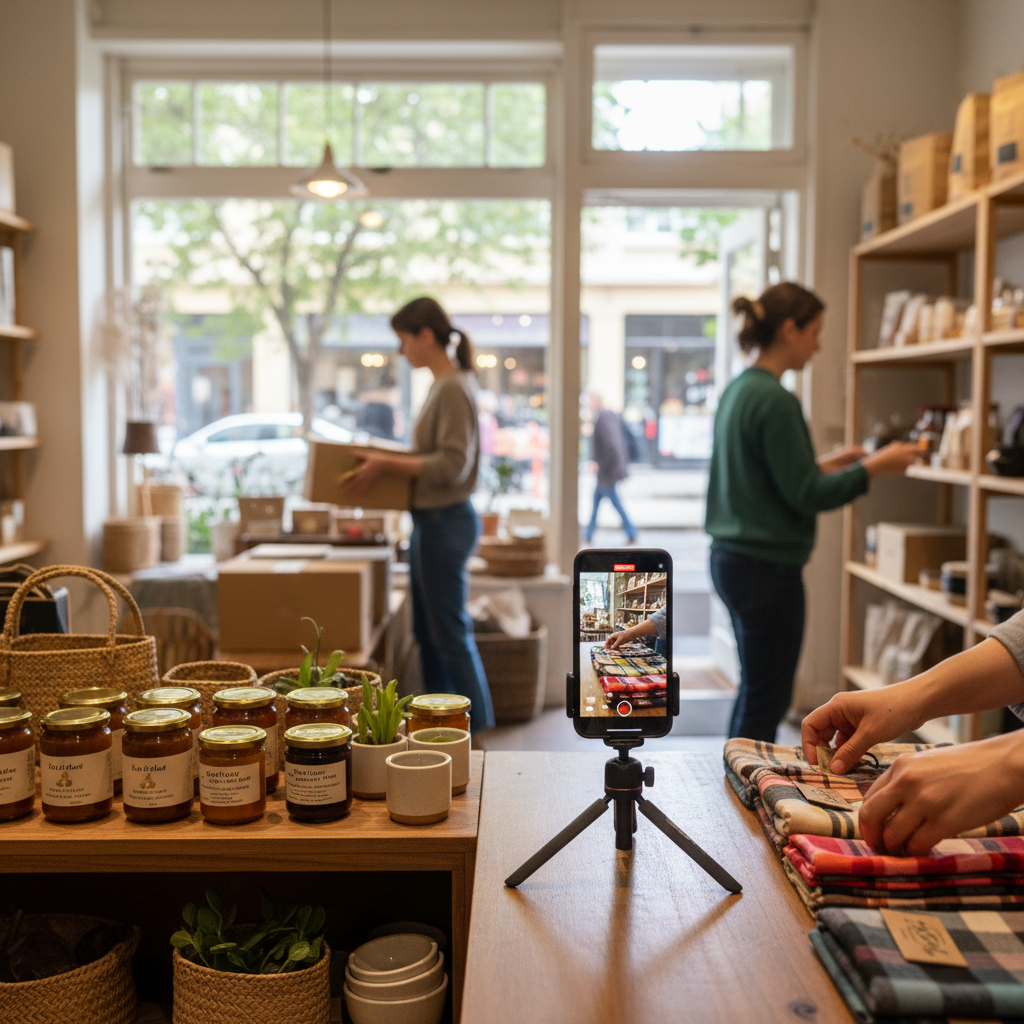
How to Run a Simple 5‑Post Weekly Content Rhythm That Actually Brings Customers
Stop posting at random and expecting walk-ins. This article gives a step-by-step 5-post weekly system with exact captions, a batching checklist, and a timeline to win repeat customers.
6 min read
BrandZilla EditorialReviewed by marketing operators· Updated Sep 25, 2026· 6 min read
You know the problem: you post when you remember, nothing changes, and then you stop posting. Or worse — staff post off-brand one day and silence the next. Either way, customers don’t notice.
You need a system that’s small-business friendly: predictable, repeatable, and cheap to run. Not daily improvisation, not a spreadsheet you never open.
This is a 5-post weekly rhythm built around one anchor piece. It’s designed so a single owner—or one staff member—can produce a week’s worth of content in about 90 minutes.
The core idea: one anchor piece, four supporting posts
The fastest way to stay visible is to make one piece of content the week’s anchor and stretch it into four related posts. That gives you variety without extra creativity. Here’s the pattern that works for local businesses:
Anchor (video or long photo post) — explain something useful or show a process.
Social proof — a customer photo, review screenshot, or before/after.
How-to / tip — short actionable advice related to the anchor.
Behind the scenes — short clip or photo showing staff, prep, or shop life.
Soft offer / logistics — availability, how to book, or limited-time slot.
Reality check: Most small businesses post 3x then quit. Consistency beats creativity 9 times out of 10.
Why five posts? (and why not daily)
Five posts each week covers the window where local customers are scanning feeds without asking for a daily production grind. It gives you enough touchpoints for trust-building and enough variety to keep your account interesting.
Daily posting comes with higher production cost and burnout. Three posts a week is fine, but five is the sweet spot for momentum—especially when each post is a stretch from one anchor asset.
What an actual week looks like — exact schedule and captions
Example week (anchor posted Monday morning):
Monday (Anchor): 30–60s reel showing a service/process.
Tuesday (Social proof): Photo of a happy customer + 2-sentence review.
Wednesday (How-to): Photo or 15s clip with one quick tip.
Friday (Behind the scenes): 10–20s clip of staff prepping.
Sunday (Soft offer): A short post listing available slots or a small weekend note.
Exact captions — copy/paste and customize:
Anchor (video): “Why we [do X] the way we do: 3 reasons you’ll notice the difference. 1) [benefit] 2) [benefit] 3) [benefit]. Book a spot: [link/number].”
Social proof (photo + quote): “Meet [first name] — they said ‘[short quote]’. We’re booking next-week appointments now: [CTA].”
How-to (tip): “Quick tip: [one-sentence tip]. Try it for 3 days and tell us how it goes — DM us a photo.”
Behind the scenes (short clip): “A little morning prep before we open. This is our secret to [outcome]. Say hi when you pop by.”
Soft offer (logistics): “Open slots this week: Thu 2–4pm, Sat 9–11am. Call [number] or book online [link].”
Quick win: Repurpose one customer review into a 3-post mini series this week.
A 90-minute batching routine (what to record, when)
Do this once a week (or every two weeks) and schedule posts out.
10 min: Plan anchor topic and write captions (use the templates above).
30 min: Film anchor video (2–3 takes) and 2 behind-the-scenes clips.
20 min: Create short clips for social proof (overlay a review screenshot on a photo or clip).
15 min: Upload, add captions, and schedule in your scheduling tool.
Tips while shooting:
Keep videos 15–60 seconds. People scroll fast.
Use natural light and steady framing.
Capture short vertical clips for reels/stories.
A realistic expectation: you’ll spend 90–120 minutes for the first few weeks, then 60–90 minutes once you’re practiced.
Production checklist (copy, captions, hashtags, CTAs)
Captions written using the templates above.
3–5 relevant local hashtags (city, neighborhood, service).
One primary CTA per week (book, call, DM).
Thumbnail/cover image chosen for anchor video.
Link or booking details in profile updated.
Common mistake: Treating Instagram captions like tweets — context outperforms one-liners for local businesses.
Repurposing map: stretch the anchor into everything
From one 30–60s anchor you can get:
Two 15s clips for reels/stories.
A 3-photo carousel showing steps.
One newsletter blurb.
One Google Business post.
Short caption variations for next week’s social proof post.
Stretching like this makes five weekly posts feel effortless.
Mini-example: The neighborhood barber
Ramos Barbershop (2 chairs, owner Antonio) used this system during a slow season. He filmed one 45s anchor video on Monday about “How we shape hairlines for longer-lasting fades.”
In six weeks he consistently posted the five-post rhythm and did a small follow-up: he offered one guaranteed slot each Tuesday for walk-ins.
Results in 6 weeks:
New weekly bookings attributed to posts: +6 (steady for the shop’s capacity).
Return visits from people who mentioned the reel: 4.
Time spent weekly: 75 minutes.
This is the kind of lift a predictable content rhythm produces — not viral hits, but steady, profitable attention.
Scheduling and measurement: what to track
Track the following each week for 8 weeks:
Number of bookings that mentioned social.
Profile visits.
Messages about availability.
Engagement rate (likes + comments divided by followers) — a rough signal.
Expect to see traction in 4–8 weeks. If nothing changes after 8 weeks, tweak the anchor topic and repeat.
Local business example: A bakery in Brooklyn moved from 2 walk-ins/day to 11 by posting one behind-the-counter reel each morning.
When to change the rhythm
Keep the 5-post system for 8–12 weeks before making structural changes. After that:
If bookings rise steadily, keep going and scale offers.
If engagement is flat, try new anchor topics aimed at a different local need (events, workshops, products).
If you consistently run out of content, shorten to 3 posts/week while maintaining the same anchor/stretch approach.
Practical shortcut: You can build this system manually — or use BrandZilla to stay consistent without hiring a social media manager.
Shooting scripts and captions you can steal
Anchor video (30–45s script):
Intro (3–5s): “Hey, I’m [name] from [business].”
Problem (5–8s): “Most people get [problem].”
How you fix it (15–20s): Three short steps.
Close (5–7s): “We’ve got openings Wed + Sat — DM to book.”
One-line social proof caption: “’[short quote]’ — [first name]. We’ll save you a spot: [CTA].”
Hashtag set (example): #[city] #[neighborhood] #[service] #[smallbusiness] #[shopname]
Quick editorial rules (so staff can post without breaking brand)
Always include one local hashtag.
Use the shop’s voice: friendly, brief, helpful.
Don’t post price changes as casual updates — make those planned posts.
If a customer appears on video, get a quick verbal OK and a follow-up written consent.
FAQ
Q: What if I don't have time to post every day?
A: Do the 90-minute weekly batch and schedule five posts. If that still feels heavy, drop to 3 posts using the same anchor-and-stretch method. Next step: pick one anchor topic for this week and record it.
Q: Can I reuse old content without looking repetitive?
A: Yes. Recut older anchor videos into shorter clips and pair them with new captions or a different CTA. Repost with updated captions after 8–12 weeks and always change the hook.
Q: Do small businesses actually need a content calendar?
A: Yes, but keep it simple: a single column with Week, Anchor Topic, and Primary CTA is enough. Plan four weeks ahead and review after 8 weeks.
Q: How long before posting consistently actually brings in customers?
A: Expect to see measurable booking-related inquiries in 4–8 weeks if you post consistently and include an easy CTA. Next step: commit to 8 weeks and track bookings that mention social.
A short, practical thought: stop chasing viral ideas and build predictable visibility. A simple, repeatable 5-post rhythm gives you that predictability without burning staff out.
If you want a small-business friendly shortcut to keep the rhythm, BrandZilla helps teams stay visible and consistent without hiring a full-time social manager.
The real objections — answered straight, no fluff.
BrandZilla Editorial Team
SMB MarketingContent Strategy
Practical playbooks written and reviewed by people who actually run content programs for small and local businesses — not generic AI output. Every guide is pressure-tested against what real operators do on Instagram, Facebook, LinkedIn and Google.
Used by 1,000+ businessesLast updated Sep 25, 20266 min read
Get weekly content ideas for your business
Join business owners getting practical, ready-to-post BrandZilla content prompts every week. No spam.