

Facebook Marketing

How to Write Facebook Posts That Actually Bring Customers

A hands-on guide with ready-to-use templates and a simple posting system to turn Facebook activity into messages, calls and bookings — without daily improvisation.

7 min read
BrandZillaBrandZilla EditorialReviewed by marketing operators
How to Write Facebook Posts That Actually Bring Customers

You know the problem: you post on Facebook, get a couple of likes, and hear nothing. Customers don’t message, calls don’t spike, and your specials get ignored. It feels like shouting into a void — and running a small business doesn’t leave time for guessing.

This article fixes that with practical rules and copy you can use this week. No theory-heavy marketing lectures — just a 5-step post framework, nine exact templates (copy-paste), and a simple weekly rhythm that moves people to message, call, or book.

Reality check: Most small businesses post 3x then quit. Consistency beats creativity 9 times out of 10.

The single rule that changes everything

Stop treating Facebook posts like one-off thoughts. Treat each post as a small conversation designed to move someone one step closer to a sale: notice → trust → action.

Those three steps map to the content types you should post each week. If every post has one of these purposes, your feed stops being random and starts building momentum.

The 5-step post framework (use every time)

  1. Hook (1 line): Grab attention. Use a problem, number, or time-sensitive line.
  2. Value (1–3 lines): Solve the problem or make the benefit obvious. Be specific.
  3. Evidence (1 line): A photo, testimonial, or a quick stat. Local proof matters.
  4. Clear next step (CTA): Message us, call, book online, or come by. Use one action.
  5. Urgency or ease (1 line): A short reason to act now or how easy it is.

Use this for every post you publish. Keep each section tight — people scan.

Nine plug-and-play Facebook post templates

Below are templates you can copy, paste, and tweak in under 5 minutes. Use the 5-step framework as you adapt them.

  1. Quick Store Update (walk-ins)
  • Hook: "We’ve got 12 fresh loaves on the counter this morning — and two are already gone."
  • Value: "Drop by before 11am for a free sample of our new cinnamon swirl."
  • Evidence: "(photo behind the counter)"
  • CTA: "Message us to reserve a loaf →"
  • Urgency: "Limited supply today."
  1. One-Minute How-To (trust)
  • Hook: "How to keep your houseplants alive during heatwaves (3 quick tips)."
  • Value: "Tip 1: move to bright shade. Tip 2: water early. Tip 3: mist leaves."
  • Evidence: "(short video or photo of your display)"
  • CTA: "DM if you want plant care for your [neighborhood] home."
  • Urgency/Ease: "Quick advice — no appointment needed."
  1. Customer Story (social proof)
  • Hook: "Jane brought her child in after hours and we fixed their bike before school."
  • Value: "We tightened the brakes and replaced a tube — ready in 45 minutes."
  • Evidence: "(photo + short quote from Jane)"
  • CTA: "Call us at 555-1234 to book same-day repairs."
  • Urgency: "Drop-offs welcomed before 3pm."
  1. Limited Offer (direct sales)
  • Hook: "Weekend special: buy one haircut, get a deep-condition for $10."
  • Value: "Available Saturday & Sunday only."
  • Evidence: "(before/after photo)"
  • CTA: "Message to reserve a slot — we have 8 openings."
  • Urgency: "Offer ends Sunday at 5pm."
  1. Behind-the-Scenes (humanize)
  • Hook: "Meet Marco — he’s been with us 6 years and makes every espresso with a smile."
  • Value: "Marco’s tip: try the flat white if you want less bitterness."
  • Evidence: "(photo of Marco)"
  • CTA: "Say hi next time you’re in. Need directions? DM us."
  • Urgency/Ease: "Open until 7pm tonight."
  1. FAQ Post (reduce friction)
  • Hook: "Do you offer wheelchair access?"
  • Value: "Yes. Our ramp is to the left of the main door and we have wide aisles."
  • Evidence: "(photo of entrance)"
  • CTA: "Message for a quiet-hour appointment."
  • Urgency/Ease: "We can schedule same-day if available."
  1. Before & After (results)
  • Hook: "From stained to showroom-ready in 3 hours."
  • Value: "We removed coffee stains and sealed the wood."
  • Evidence: "(before/after photos)"
  • CTA: "Book a consultation — call 555-6789."
  • Urgency: "Slots fill fast for weekend projects."
  1. Local shout-out (community)
  • Hook: "Shout-out to [Neighbor Business] for hosting last night’s market."
  • Value: "We sold out of the honey jar in 30 minutes — thanks!"
  • Evidence: "(photo from the event)"
  • CTA: "See our event schedule in the comments."
  • Urgency/Ease: "Next one’s in two weeks."
  1. Simple Poll (engagement + data)
  • Hook: "Which new pastry should we add next month? A) Lemon tart B) Almond croissant"
  • Value: "Your vote decides what we make."
  • Evidence: "(photo of both options)"
  • CTA: "Comment A or B — winners get a 10% coupon."
  • Urgency: "Voting closes Friday."

Quick win: Repurpose one customer review into a 3-post mini series this week.

Weekly rhythm that doesn’t eat your day

Use a 5-post weekly rhythm built from one anchor piece. You don’t need daily creativity — you need a predictable pattern.

  • Monday: Anchor post (How-to, long value) — 40–80 words + photo/video.
  • Wednesday: Customer story or before/after — short, proof-based.
  • Friday: Limited offer or event notice — direct CTA.
  • Saturday: Behind-the-scenes or local shout-out — human connection.
  • Sunday: Poll or FAQ — light engagement and data collection.

Batch one anchor post and the rest in a 60-minute session once a week. Plan photos and simple captions, then schedule.

Practical shortcut: You can build this system manually — or use BrandZilla to stay consistent without hiring a social media manager.

How to measure what matters

Track three metrics weekly: messages, calls, and bookings (or store visits if you can). Likes are vanity — use them for small decisions, not strategy.

  • Messages: Count inquiries that include a next step (booking, quote request).
  • Calls: Note caller intent (ask to log quick notes in a spreadsheet).
  • Bookings: Matches directly to revenue — the most important.

If messages double in a month but bookings don’t, look at your reply script. The post worked; the follow-up didn’t.

Exact reply scripts that close

Keep replies short and action-focused. Use these exact lines.

  • For inquiries about availability: "Thanks — we have [two] openings this week. Which day works best, Tue or Thu?"
  • For price questions: "Standard price is $X. That includes [list]. Want me to reserve a spot?"
  • For walk-in-friendly answers: "Yes, drop by between 10–2. If you want to guarantee service, I can hold a slot — what time?"

Reply within 60 minutes during business hours. Slow replies kill momentum.

Common mistake: Treating Instagram captions like tweets — context outperforms one-liners for local businesses.

Mini example you can copy tonight

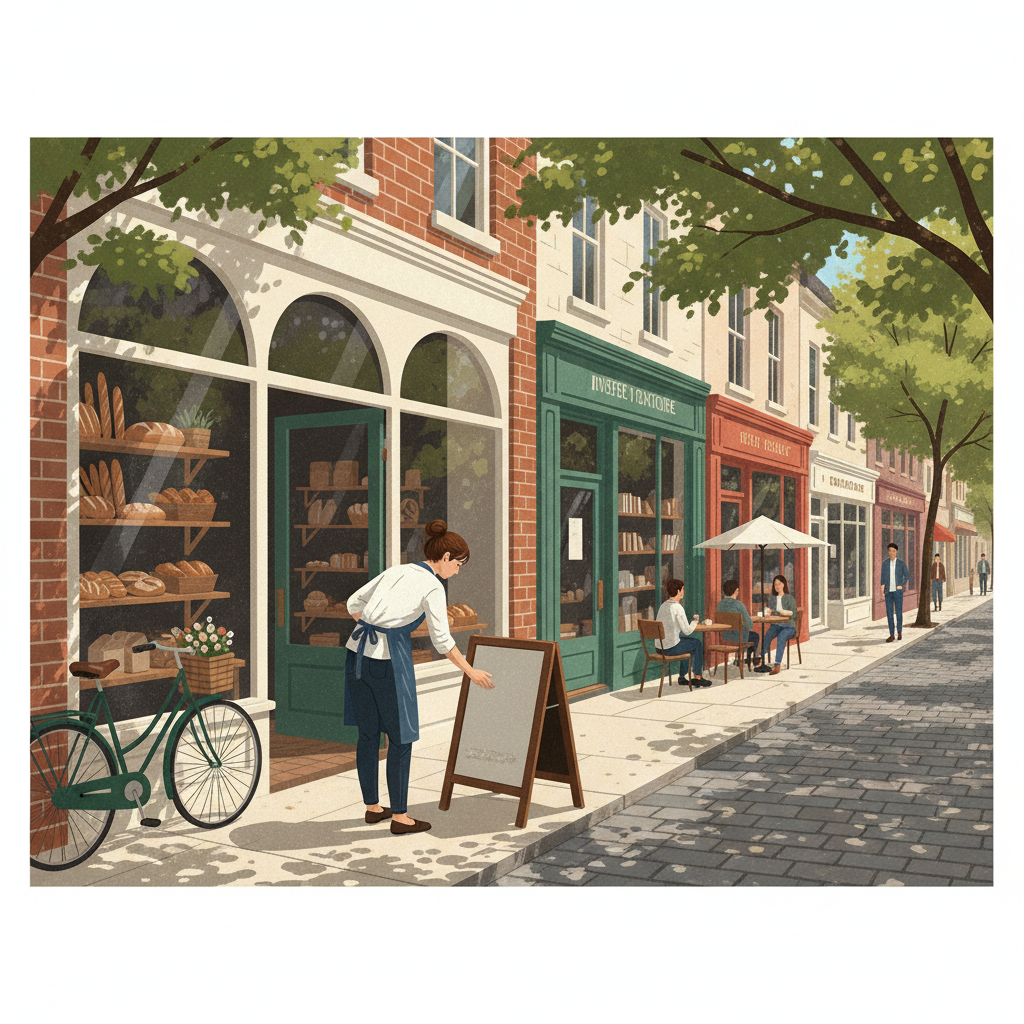
Local business example: A bakery in Brooklyn moved from 2 walk-ins/day to 11 by posting one behind-the-counter reel each morning and a weekend limited-offer post. In six weeks their weekend orders grew from 8 to 34 — they reserved two morning slots and added a part-time baker.

What they did: one 30-second reel showing fresh baking at 7:30am, a lunchtime customer story post at 1pm, and a Friday offer at 9am. They replied to messages within 45 minutes and used the simple reply scripts above.

Quick checklist before you post

  • Photo/video: clear, well-lit, local context.
  • Caption: uses the 5-step framework (hook → value → evidence → CTA → urgency).
  • Single CTA: only one next step per post.
  • Reply plan: who replies and within what time.
  • Measurement: record messages, calls, bookings for the week.

When to use ads vs organic posts

Use ads when you need volume quickly — e.g., filling a pop-up event or a seasonal push. Organic posts win loyalty and local awareness. If you test an ad, promote your best-performing organic post and keep the copy identical.

Small-budget testing plan (if you choose ads)

  • Run $10/day for 5 days on one organic post.
  • Target a 5–10 mile radius, interest-based + local behaviors.
  • Measure messages and bookings. If cost per booking < your margin, scale.

Final operational tip

Document one winning post each week. Make it a template, then reuse the structure. You don’t need fresh every time — you need reliable.

If you want a simple system to keep this schedule running, start with the 5-post weekly rhythm above and batch content on one morning per week.

A small, steady schedule and clear reply scripts win for local businesses. Treat Facebook like a conversation — and make each post a single, simple invitation to act.

Local business example: A bakery in Brooklyn moved from 2 walk-ins/day to 11 by posting one behind-the-counter reel each morning.

#facebook marketing#local business#social media content#content templates#customer acquisition

Questions business owners actually ask

The real objections — answered straight, no fluff.

BrandZilla

BrandZilla Editorial Team

SMB MarketingContent Strategy

Practical playbooks written and reviewed by people who actually run content programs for small and local businesses — not generic AI output. Every guide is pressure-tested against what real operators do on Instagram, Facebook, LinkedIn and Google.

Used by 1,000+ businessesLast updated Jun 26, 20267 min read

Get weekly content ideas for your business

Join business owners getting practical, ready-to-post BrandZilla content prompts every week. No spam.

No spam. Unsubscribe anytime.

Related articles