
Opening with the real problem in the reader's words:
You're ready to change your shop's look or name, but you're scared of losing the people who keep your doors open. You know your old logo feels tired, or your menu/offer has shifted, but you also know customers value familiarity.
Rebrands that work don't start with a logo. They start with a plan to keep customers calm, curious, and coming back during the switch. This is a practical, no-fluff playbook you can run in 4–8 weeks.
The one-line rule before you change anything
If you can't explain the rebrand in one line to a regular customer, don't launch it yet. That one line is the backbone of every in-store sign, social post, and email you write during the switch.
Reality check: Most small businesses start a rebrand and treat communication as an afterthought. The design is easy. Keeping customers is the hard part.
6-week rebrand playbook (customer-first)
This timeline assumes a modest local business (cafe, barber, boutique) with one location and a small team. Adjust timings if you need slower approvals.
- Week 0: Decide the “why” and the non-negotiables
- One-sentence reason for the rebrand: clarity > cleverness.
- Non-negotiables: core product names customers know, price ranges you won't change, and any legacy elements you want to keep.
- Pick a launch window that avoids your busiest holiday.
Deliverable: The one-line explanation and the list of non-negotiables.
- Week 1: Test the message with 10 loyal customers
- Call or chat with 10 regulars (in-person is best). Say the one-line reason and ask: “Would this feel different to you?”
- Record common objections and conscious wins.
Deliverable: A short list of customer concerns to answer in the launch comms.
- Week 2–3: Build the visible assets and the hand-holding content
- Update logo, signage artboard, menus, and social profile banners.
- Draft three email/SMS messages and three short in-store scripts for staff.
- Prep 5 social posts that explain the change (see templates below).
Deliverable: All assets and scripts in a single folder the team can access.
- Week 4: Soft rollout and staff rehearsal
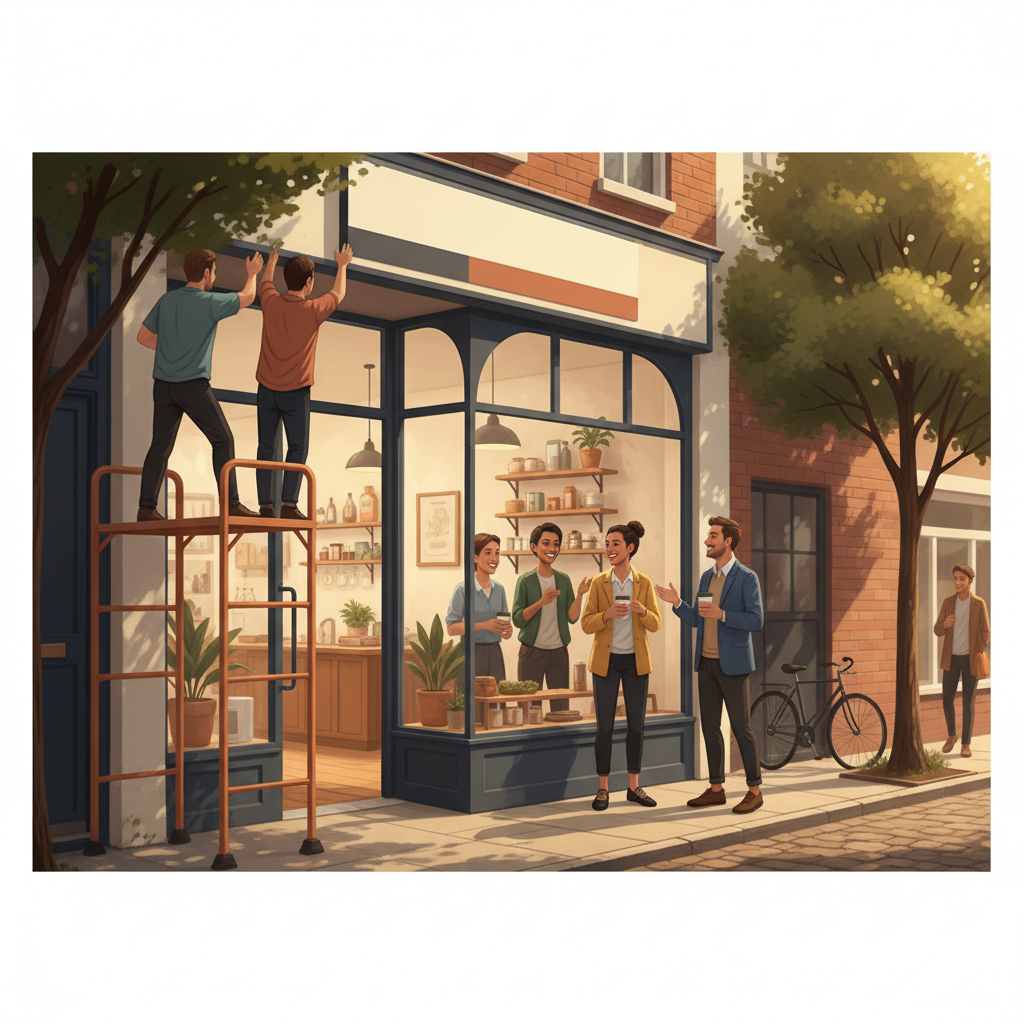
- Swap signage in low-traffic hours. Test how staff explain the change in 30 seconds.
- Offer staff two rehearsed lines and one fallback: “If they ask for the old name, reassure them this is the same team with better [benefit].”
Deliverable: Staff script sheet and rehearsal notes.
- Week 5: Public launch week
- Email/SMS on day 1. Social posts across the week. Small in-store incentive (free cookie with purchase) to encourage visits.
- Track foot traffic and mention keywords like the old and new name.
Deliverable: Launch metrics and a customer FAQ log.
- Week 6: Follow-up and tidy-up
- Thank regulars publicly. Fix any signage or copy glitches.
- Keep the same hours and service levels for 30 days to reduce friction.
Deliverable: Post-launch report and plan for next 90 days of consistent content.
Scripts and copy you can use tomorrow
Use these exact lines — brevity and familiarity are your friends.
-
One-line reason (say this first): “We updated our look to make it easier for new neighbors to find us — same coffee, same people.”
-
In-store staff script (30 seconds):
- “You might notice we refreshed our look — same menu, same team. We tweaked the name and sign to reflect how the neighborhood calls us.”
-
Social announcement (post 1):
- Short caption: “New look, same [product]. Meet [New Name]. We’re still your local [category]. Come by this week for a complimentary treat when you say ‘Hey, I saw the new sign.’”
-
FAQ reply for worried customers: “No changes to your order or our hours. We just made our storefront easier to spot.”
Common mistake: Treating the rebrand like a design drop. Customers care about how the change affects their experience, not the color palette.