How to Use Stories to Bring Local Customers: 7 Tactical Types
If you post stories but don't get customers, you're likely missing structure. This guide gives seven story types, exact scripts, a weekly schedule, and one mini-example you can copy this week.
6 min read
BrandZilla EditorialReviewed by marketing operators· Updated Oct 17, 2026· 6 min read
If your Stories get views but not customers, you're not alone. Stories are great for attention, but without a plan they become noise. Small businesses need a repeatable, low-effort system that builds trust and drives action.
This guide gives seven practical Story types, exact word-for-word overlays and DM scripts, a 5-post weekly rhythm you can actually stick to, and a concrete local example with numbers and a timeframe.
Why Stories matter for local businesses (and what most people get wrong)
Stories sit at the top of the customer funnel: they're cheap to produce, intimate, and appear first on people's phones. But most small businesses treat Stories like ephemeral doodles — same clip every day, no clear call to action, no follow-up.
Three simple shifts change everything:
Make one post an anchor (the informative piece) and build 4–5 quick reactive or proof posts around it.
Use Stories to collect micro-actions (reply, poll, DM) not just views.
Turn replies into bookings with a short reply script and a follow-up checklist.
Reality check: Most small businesses post 3x then quit. Consistency beats creativity 9 times out of 10.
Seven Story types that actually move customers
Use these types across both Instagram and Facebook Stories (same content, slight copy changes). Pick 3–4 types per week and repeat the rhythm.
The Anchor: a short tip, menu item highlight, or service detail. Make this the most polished clip.
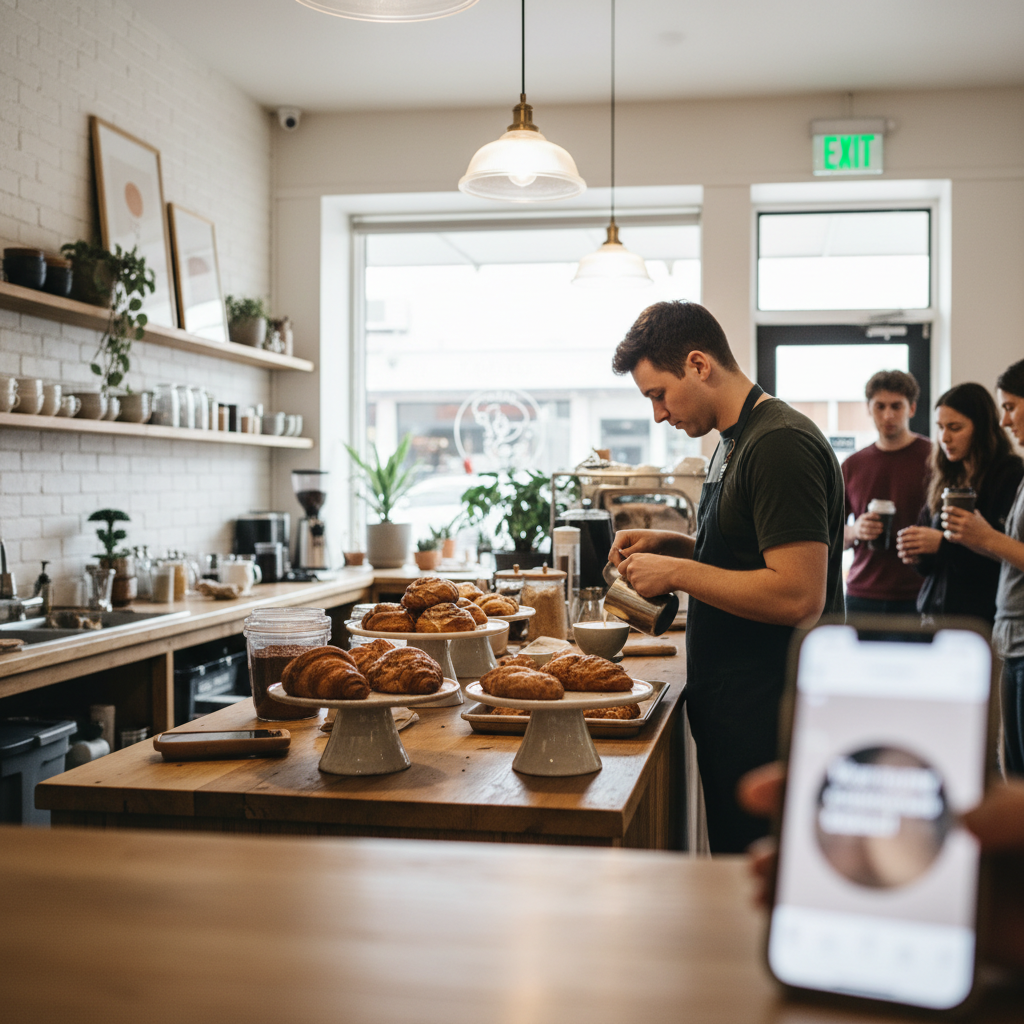
Behind-the-counter: humanize the team with a small task clip (30s max).
Proof clip: quick customer reaction, before/after, or a real ticket.
Urgent offer: small-limited offer or a same-day discount with a clear micro-commitment.
Q&A sticker: answer one real question; saves future DMs.
Poll/quiz: low-effort engagement that also signals interest.
Direct CTA: ask for a DM, booking tap, or phone call and show the next steps.
Each type should be 5–15 seconds and use the same visual style (simple text overlays, 1 brand color, and your logo on the first frame).
Quick win: Repurpose one customer review into a 3-post mini series this week.
Exact scripts and overlays to copy-paste
Use these word-for-word for text overlays and sticker prompts. Adjust names and times.
Anchor (text overlay): "What makes our morning croissant special: we bake at 5am. Come by 8–10am for fresh batches."
Behind-the-counter (voice or text): "Maya here—today I'm hand-glazing the blackberry scone. Want one hot? Reply ‘Scone’ and I’ll save it."
Proof clip (caption): "Real reaction — first bite, zero regrets. Reply ‘Taste’ and we’ll set one aside."
Urgent offer (sticker + text): "Today only: latte + pastry $6 until 11am. Tap to order or reply ‘Hold’ for pick-up."
Q&A sticker prompt: "Ask us anything about catering sizes — answer at 3pm."
Poll/quiz options: "Which muffin? A. Blueberry B. Banana-walnut. Vote & we’ll bake the winner tomorrow."
Direct CTA (overlay + DM script): Overlay "DM ‘BOOK’ to reserve a table for today". When a customer replies:
Business reply (first message): "Thanks! What's your name and preferred time?"
Business reply (after time): "Great — you’re down for [time]. Reply with a phone number to hold it (we’ll only call if needed)."
Common mistake: Treating Instagram captions like tweets — context outperforms one-liners for local businesses.
A 5-post weekly rhythm you can actually stick to
This schedule works for cafes, salons, repair shops, clinics — anything with repeat local customers.
Monday: Anchor (educate) + Poll
Wednesday: Behind-the-counter + Q&A sticker
Friday: Proof clip + Urgent offer
Saturday morning: Direct CTA (weekend booking push)
Sunday evening: Recap + ask for replies (best customer moments of the week)
Batching tip: Film everything in one 30–45 minute session on Monday and schedule (or post manually). For appointment businesses, record 2–3 short clips of the service and one staff intro.
What actually works: A 5-post weekly rhythm built from one anchor piece — not daily improvisation.
Mini-example: How one bakery turned Stories into 11 more walk-ins/day
Local business: Green Hill Bakery, an 8-seat shop in Portland.
Baseline: 2 walk-ins/day from social. Goal: boost morning foot traffic and sell day-old loaves.
Plan: 5-day Story rhythm for two weeks. Daily morning Anchor about a product, Behind-the-counter clip mid-morning, and a Direct CTA mid-day offering a 20% loaf discount if they reply via DM.
Tactics used: Q&A about preferences, a poll on which flavor to bake, and a proof clip of customers enjoying bread.
Result in 6 weeks:
Average morning walk-ins from Stories rose from 2 to 11/day.
35% of replies converted to a reservation or promised pick-up.
Weekly time spent on Stories: 90 minutes (batch-recording + touch-ups).
Exact message that converted most customers:
Story overlay: "Fresh rye at 9:30. Reply ‘RYE’ and we’ll set one aside (20% off today)."
First DM reply: "Thanks! What name should I hold it under?"
Follow-up: "Perfect — see you at 9:30. Reply 'HERE' when you arrive for counter pick-up."
That simple loop (announce → collect reply → confirm → handoff) is all you need to convert attention into a transaction.
How to handle replies and turn them into bookings (the exact follow-up checklist)
Reply within 15 minutes if possible — speed = trust.
Use the 2-step confirmation script: ask name + time, then ask for a simple micro-commitment (phone or ‘reply HERE on arrival’).
Log the reply in a simple sheet: name, time, item/seat, contact, follow-up note.
Send a short reminder Story or DM 30–60 minutes before the reserved time: "We’ll hold this until [time]. Reply 'HERE' when you arrive."
At handoff, thank them and ask for a quick Story tag or review.
Measurement (start simple): track replies, confirmed bookings, no-shows, and same-day conversions. A reasonable early target: convert 20–30% of Story replies into sales in the first 4–6 weeks.
Steal this template: "We help [audience] [outcome] without [pain]. Here's how →"
Quick design and legal checks (keep it simple)
Text readable: use 24–36pt equivalent, bold contrast.
Keep audio optional: add short captions because many people watch without sound.
Avoid customer personal data in public: do confirmations in DMs, not on public Stories.
If offering discounts, set a clear expiry and limit per customer.
Time budgeting: realistic expectations
If you're single-owner with limited time, aim for a 45–90 minute weekly batch. Spend 15 minutes daily checking replies. If you have staff, hand off the reply role for specific hours.
If you can’t post every week: prioritize the Anchor and one Direct CTA. Two solid Story days beat inconsistent daily posting.
Local business example: A bakery in Brooklyn moved from 2 walk-ins/day to 11 by posting one behind-the-counter reel each morning.
Common questions
Q: What if I don't have time to post every day?
A: Batch record once a week. Do the Anchor + Direct CTA and repeat — it's enough. Next step: schedule one 45-minute batch session and film five clips.
Q: Can I reuse old content without looking repetitive?
A: Yes. Refresh old clips with a new overlay and a current CTA. Test one refreshed Story per week and measure replies. Next step: pick 3 high-performing posts and refresh them.
Q: Do small businesses need a content calendar?
A: Yes, but keep it tiny. One week ahead with a 5-post rhythm is enough. Next step: make a single calendar row with Story type and CTA for each day.
Q: How long before posting consistently actually brings in customers?
A: Most businesses see measurable lifts in 4–8 weeks when they post the Anchor + Direct CTA rhythm and follow replies. Next step: run the 5-post rhythm for six weeks and track replies → bookings.
Practical shortcut: You can build this system manually — or use BrandZilla to stay consistent without hiring a social media manager.
A final tip: treat Stories like a conversation, not an advertisement. If you can get one reply per 20 views and convert 25% of those replies, you have a simple, repeatable customer pipeline. Keep the creative simple, focus on speed of reply, and measure three things: replies, confirmations, and walk-ins.
If you want to stay consistent without hiring someone full-time, a small system and a clear rhythm matter more than polished production. BrandZilla is one practical way some businesses use to keep that rhythm running without more hires.
The real objections — answered straight, no fluff.
BrandZilla Editorial Team
SMB MarketingContent Strategy
Practical playbooks written and reviewed by people who actually run content programs for small and local businesses — not generic AI output. Every guide is pressure-tested against what real operators do on Instagram, Facebook, LinkedIn and Google.
Used by 1,000+ businessesLast updated Oct 17, 20266 min read
Get weekly content ideas for your business
Join business owners getting practical, ready-to-post BrandZilla content prompts every week. No spam.