Reels vs Stories for Local Businesses: Where to Spend Your Time
Should you focus on Reels or Stories to get local customers? Here’s a straightforward decision framework, practical weekly rhythm, caption templates, and a real local-business example.
6 min read
BrandZilla EditorialReviewed by marketing operators· Updated Nov 8, 2026· 6 min read
Opening: the real problem in your words
You only have a few hours a week to manage Instagram. You’ve heard Reels ‘win’ attention and Stories build relationships — but you don’t have time for both at a high level.
So you default to posting whatever feels easy and then wonder why the phone doesn’t ring more. The question you actually need answered: which format will move customers through awareness to booking for your specific local business?
This article gives a practical decision framework, exact weekly rhythm you can copy, caption and Story scripts, and a short example you can try within 30 days.
A simple decision framework (3 questions)
Answer these in 30–60 seconds to decide where to focus.
Do you need to be found by strangers right now?
If yes (new storefront, opening soon, slow foot traffic), prioritize Reels for reach.
If no (steady regulars, repeat customers), prioritize Stories to keep bookings consistent.
Is your service visual and short-form friendly?
Reels help if the result is visual (food, haircuts, home before/after, a finished project).
If your work is process-heavy or trust-based (plumbing, therapy, B2B), Stories and static posts that explain process work better.
Can you commit to a weekly rhythm?
Reels need at least one decent clip per week to gain traction. Stories work well with daily micro-updates.
If you answered: mostly yes to reach + visual → tilt to Reels.
If you answered: mostly no + trust/education → tilt to Stories.
Reality check: Most small businesses post 3x then quit. Consistency beats creativity 9 times out of 10.
What Reels actually win at (and how to use them)
When to choose Reels
You need new local eyes on your business now.
You have results you can show in 15–60 seconds (finished product, time-lapse, transformation).
You can film a short hook (first 3 seconds matter).
How to make a useful local Reel
Hook (0–3s): show the outcome or a bold statement — e.g., "11-minute sourdough, fresh now" or "From green to glossy in one session."
Body (3–45s): 2–4 quick shots with captions that explain why it matters to a local buyer (price, turnaround, neighborhood perks).
End (last 3s): quick CTA — "Book via link in bio" or "DM for same-day".
Caption template (copy-paste):
Line 1 (why this matters): "New in [neighborhood]: fast blowouts that fit your lunch break."
Line 2 (value/price): "30 minutes — $45. Walk-ins welcome 12–2pm."
Line 3 (local CTA): "Tap the map pin or DM us to hold your slot."
Hashtag tip: use 3-5 local tags + 2 niche tags. Example: #BrooklynSalon #LunchBreakBeauty #BrooklynHair
Timing: post once a week for 8 weeks and measure new enquiries that mention Instagram.
Quick win: Repurpose one customer review into a 3-post mini series this week.
What Stories actually win at (and how to use them)
When to choose Stories
You need to keep current customers booking and to shorten the sales cycle.
Your product requires explanation, trust, or time-based availability (appointments, same-day deals).
You can post short, repeatable clips daily.
Story formats that work for locals
The Availability Story: quick daily slide with today’s open slots and a clear booking link.
The Micro-Tutorial: 3–4 slides showing a step or tip (how to style a haircut, how to care for a plant) building trust.
The Social Proof Carousel: a photo of the customer + 1-line quote + booking CTA.
Slide 2 (10s): quick clip showing the space or setup
Slide 3 (15s): short customer clip or screenshot of a review
Slide 4 (5s): sticker to Book or Link + clear CTA "Swipe up to book"
Reuse tip: save these as Highlights titled "Today" and "How-to" so new visitors see availability and process instantly.
Common mistake: Treating Instagram captions like tweets — context outperforms one-liners for local businesses.
A practical 5-post weekly rhythm (copy this)
This is a low-effort schedule that mixes reach and relationship. Pick one week and test for 6–8 weeks.
Monday: Story — "Weekly open slots" (3 slides) — 5–10 minutes to create.
Wednesday: Reel OR carousel post — hero result or transformation — 30–60 minutes.
Thursday: Story — micro-tutorial or behind-the-scenes (2–4 slides) — 10 minutes.
Saturday: Static post — social proof (before/after + short quote) — 15 minutes.
Sunday: Story — casual check-in + reminder of booking link — 5 minutes.
Example week for a neighborhood bakery
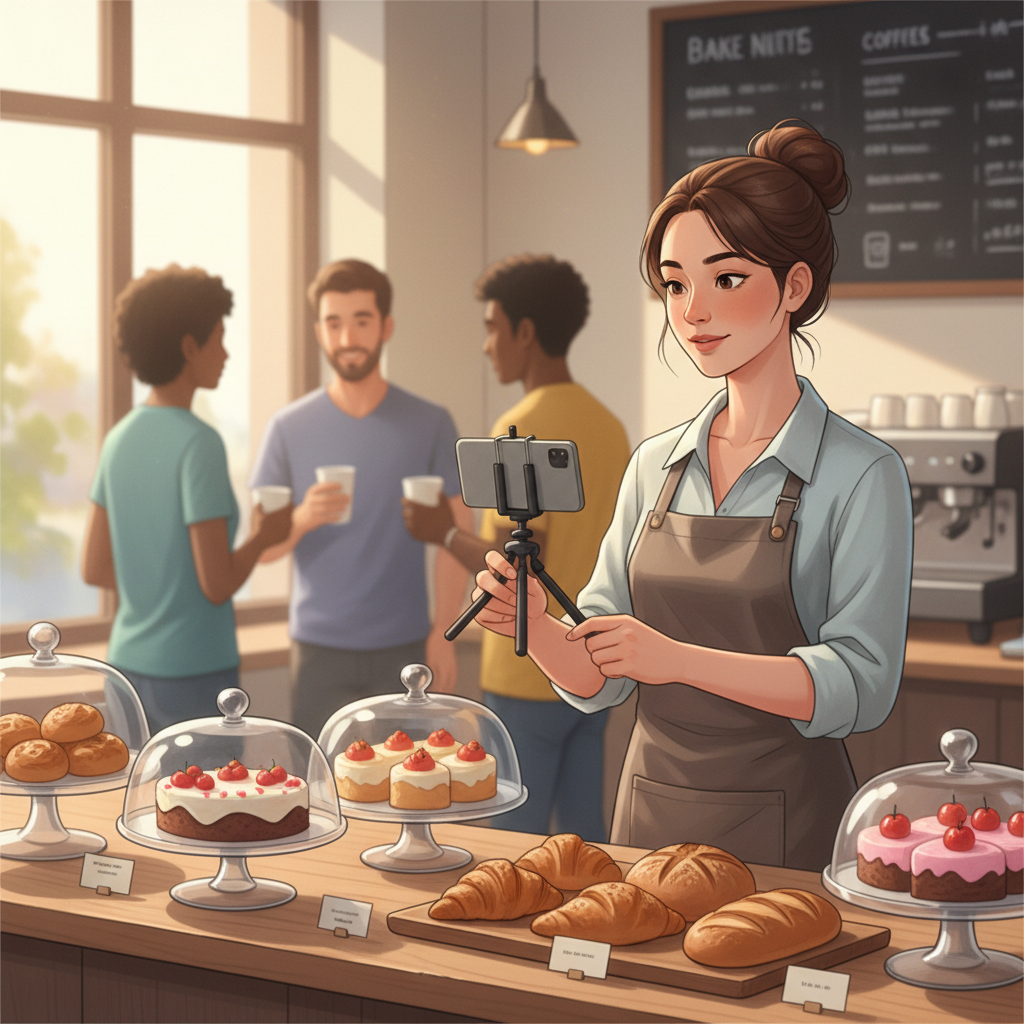
Wed Reel: 25s time-lapse of sourdough shaping + caption "Weekend loaves available — preorder by Fri 3pm".
Sat Post: photo of customer with loaf + quote "Best bread in the area!" + CTA to preorder.
Result: bakery tracked 18% increase in online preorders over 6 weeks after keeping this schedule.
Mini-example (concrete):
A 3-person barber shop in Portland switched to one weekly Reel (showing a haircut transformation), three Story slots a week announcing same-day availability, and a Saturday testimonial post. In 6 weeks their Instagram-sourced bookings rose from 3 to 11 per week — they tracked bookings with a simple "How did you find us?" checkbox at checkout.
What actually works: A 5-post weekly rhythm built from one anchor piece — not daily improvisation.
How to measure success without vanity metrics
Track these weekly numbers:
Direct bookings attributed to Instagram (simple checkbox at booking or ask when they arrive).
Number of DMs about availability.
Reel reach and saves (reach shows new eyes; saves show intent).
Story taps forward vs exits (a simple engagement quality check).
Decision rules after 6 weeks:
If Reels bring 60%+ of the new enquiries you care about — keep doing 1–2 Reels/week and reduce Stories to maintenance.
If Stories bring more direct bookings and foot traffic — flip focus and keep weekly Reels for awareness.
Steal this template: "We help [audience] [outcome] without [pain]. Here's how →"
Production checklist (15–45 minutes per piece)
Reel quick checklist
Clean, steady camera or phone.
1 clear hook shot for 3s.
2 supporting shots (10–15s total).
Natural sound or short music; captions burned in for sound-off viewers.
Caption with local CTA and 3 local hashtags.
Story quick checklist
3–4 quick slides.
One slide with explicit booking CTA and sticker.
One slide with social proof or value.
Save to Highlights.
Local business example: A bakery in Brooklyn moved from 2 walk-ins/day to 11 by posting one behind-the-counter reel each morning.
Copy templates you can paste
Reel caption (food service example):
"Fresh cinnamon buns — baked at 6am, gone by noon. Preorder online or swing by 8–11am. #YourNeighborhoodBakery #CityNameEats"
Story script (salon availability):
Slide 1: "Good morning — open slots today: 10:30am, 3pm, 6pm."
Slide 2: quick clip of chair turning
Slide 3: customer quote screenshot
Slide 4: sticker + "DM to hold your spot"
Practical shortcut: You can build this system manually — or use BrandZilla to stay consistent without hiring a social media manager.
Final checklist before posting
Have a single booking CTA in bio and in the post.
Save Stories to Highlights with clear labels (Now, How-to, Reviews).
Track bookings from Instagram with a simple question at checkout.
Reassess after 6–8 weeks and pick the format delivering the most bookings.
A small closing thought
Spend time where your customers are converting. For many local businesses that means a steady rhythm: one strong Reel each week for new eyes and daily Stories to keep existing customers moving toward booking. Start small, track bookings, and tune the balance.
If you want a template-driven content flow that mirrors this framework, BrandZilla maps these exact rhythms into repeatable weekly tasks.
#instagram marketing#local marketing#social media#content strategy#small business
Questions business owners actually ask
The real objections — answered straight, no fluff.
BrandZilla Editorial Team
SMB MarketingContent Strategy
Practical playbooks written and reviewed by people who actually run content programs for small and local businesses — not generic AI output. Every guide is pressure-tested against what real operators do on Instagram, Facebook, LinkedIn and Google.
Used by 1,000+ businessesLast updated Nov 8, 20266 min read
Get weekly content ideas for your business
Join business owners getting practical, ready-to-post BrandZilla content prompts every week. No spam.