
Local business owners often say: “I don’t have a PR budget, but I need people to notice us.” Or: “I’ve tried emailing reporters once and heard nothing back.”
That’s the real problem: you have a story people care about, but no repeatable way to get local press, podcast slots, or community calendar mentions. You’re not missing magic — you’re missing a process.
This is a practical 6-week plan to earn local authority through media, partnerships, and podcast appearances without hiring a PR agency. It focuses on predictable actions, real templates, and measurable steps you can do between customers.
Why local media still matters (and where to aim)
Local media drives three things small businesses need: awareness, trust, and Google-friendly links/mentions.
Aim for three types of coverage: local news/features (weekly papers, city magazines), community outlets (neighborhood newsletters, Facebook groups, school bulletins), and local podcasts or business shows. Each has a different audience and timeline.
- News/features: higher prestige, longer lead times (2–6 weeks). Great for big announcements (new location, fundraising, anniversary).
- Community outlets: faster, often free calendar listings or short features. Use for events or weekly specials.
- Podcasts/interviews: build authority and search presence. Usually slower but high trust if you speak to a relevant audience.
Reality check: Most small businesses post 3x then quit. Consistency beats creativity 9 times out of 10.
The 6-week plan (what to do each week)
Week 1 — Prep your press kit and pick 12 targets
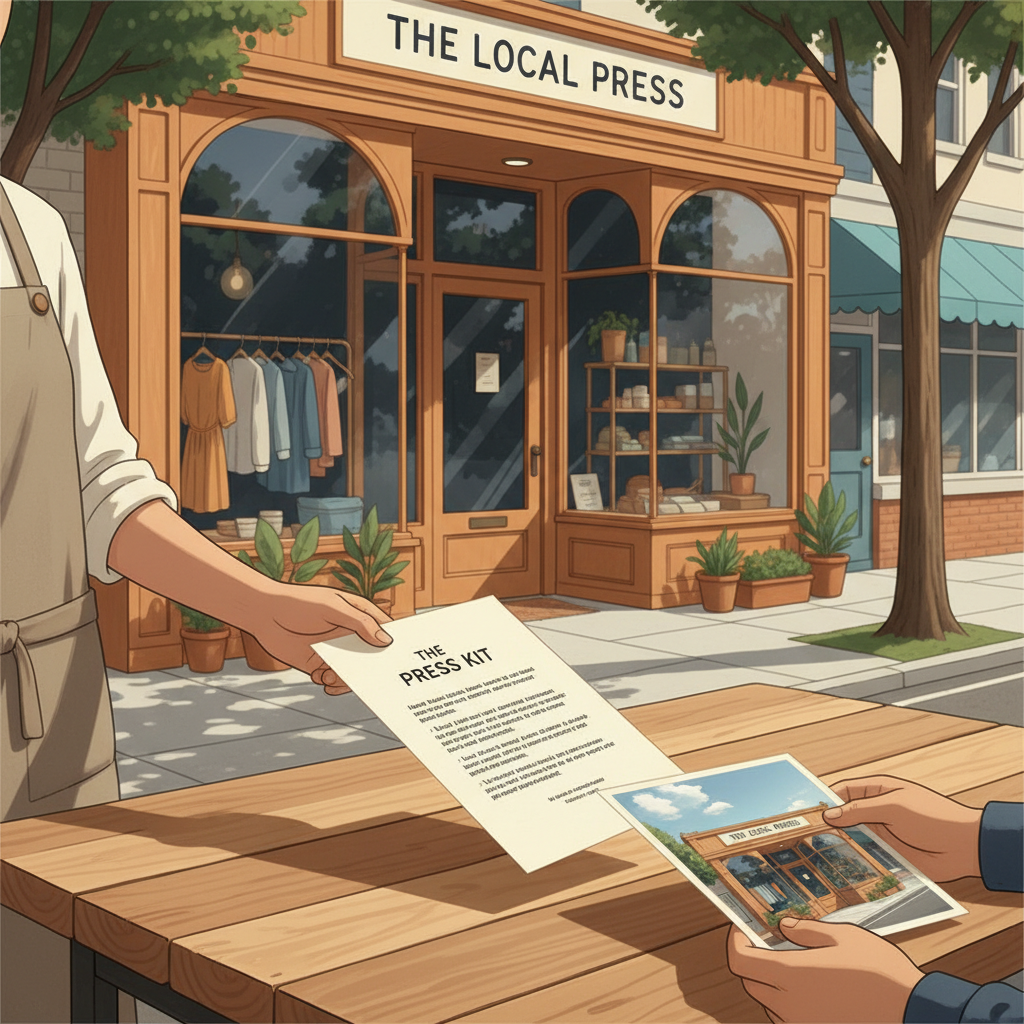
- Create a one-page press kit (see checklist below).
- List 12 targets: 4 local news outlets, 4 community outlets, 4 podcasters/hosts. Use LinkedIn, local Facebook groups, and outlet websites.
- Find the reporter/host name and a recent story to reference.
Press kit checklist (one page, PDF or web link):
- 30-word lead: what you did and who it helps.
- 200-word paragraph: short background and why it matters locally.
- 3 high-res photos (storefront, owner, product) with captions.
- 2 customer quotes (one line each).
- Contact block: name, phone, email, best times.
Week 2 — Craft three pitch templates and send the first round
Write three short pitches (News pitch, Community event pitch, Podcast pitch). Keep each under 150 words. Send to 4 targets in each category (12 total) over two days.
Example subject lines (pick one):
- "Local cafe doubles seatings with zero renovations — story?"
- "Free community family night at [Your Business] — calendar listing"
- "Quick podcast idea: Small business survival after [local event]"
News pitch template (copy-paste): Subject: [Local angle] — short story idea Hi [First name],
I’m [Name], owner of [Business]. We just [what happened in one sentence]. It’s relevant because [local angle, one sentence]. We have photos and a customer who can speak. Would you be interested in a short piece or quick interview this week?
Thanks, [Name] Phone: [number]
Community event template (calendar-friendly): Subject: Free community night at [Business] on [date] Hi [First name],
We’re hosting a free [activity] for neighbors on [date] from [time]. It’s family-friendly and includes [one highlight]. I can send a short blurb and photo for the calendar if helpful.
Best, [Name]
Podcast pitch template (short, benefit-driven): Subject: Quick guest for [Podcast name] — topic: [specific] Hi [First name],
I run [Business] in [neighborhood] and have a short story about [specific lesson or data point]. I can share practical tips on [topic] in 20 minutes or less. Recent piece: [link to relevant coverage]. Interested in scheduling a call?
Thanks, [Name]
Quick win: Repurpose one customer review into a 3-post mini series this week.
Week 3 — Follow-up and local tie-ins
If you didn’t hear back, follow up twice: 4 days after the first email, then 7 days later. Keep follow-ups one short paragraph reminding them what you offered and why it matters locally.
Add local tie-ins: find a city report, recent council decision, or seasonal angle to make your story timely. Reporters are busy — a fresh local tie often gets attention.
Follow-up script (day 4): Hi [First name],
Following up on my note about [brief story]. We’re available this week for photos or a quick interview. Attached is a one-paragraph blurb and a photo.
Thanks, [Name]
Week 4 — Host a micro-event or offer an exclusive
Plan a 90-minute micro-event (book signing, demo, free tasting) and invite media and community leaders. Offer one exclusive: first 5 photos to [local outlet] or a short Q&A with the owner.
Make the event simple: clear time, single hook, one visual moment for photos.
Common mistake: Treating Instagram captions like tweets — context outperforms one-liners for local businesses.
Week 5 — Convert earned coverage into content
When a story runs, do three things immediately:
- Share the link on your social channels and thank the outlet. Tag the reporter.
- Add the article to your press kit and website (press page).
- Create a short post summarizing the story: 2-line headline + photo + CTA: “Come see us this weekend.”
Repurpose the interview into a blog post and an email to your list. One feature can fuel 5–7 pieces of owned content.
Week 6 — Track results and plan repeat actions
Measure arrival channels (Google Analytics, ask customers “where did you hear about us?”). Track three numbers: mentions, website visits from outlet links, and foot traffic increase on promotion days.
Decide what to repeat: if local news drove customers, plan a quarterly update. If community outlets worked, schedule monthly calendar submissions.
What actually works: A 5-post weekly rhythm built from one anchor piece — not daily improvisation.