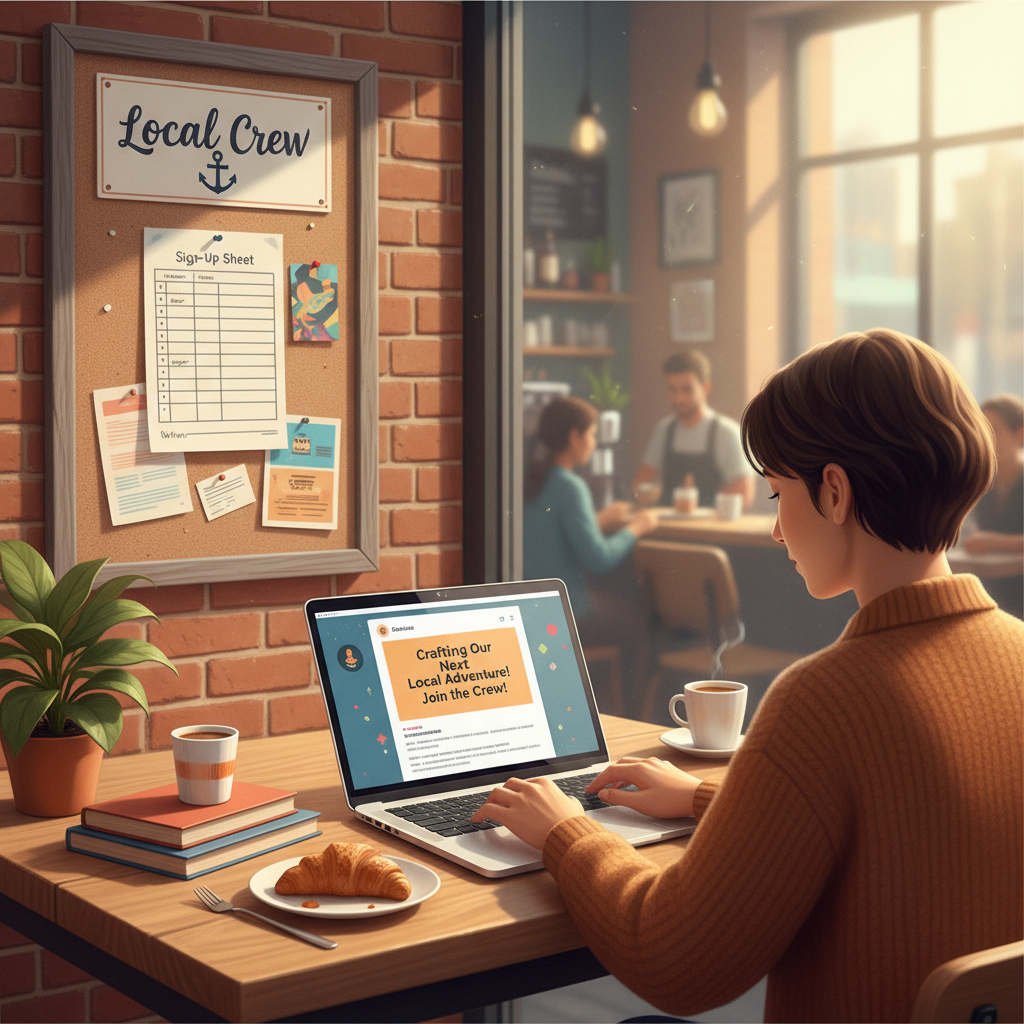
How to Use Facebook Groups to Get Local Customers (Practical Playbook)
If you keep asking whether Facebook Groups still work for local businesses — they do, when you run them like a community-first storefront. This playbook shows the exact posts, rules, and measurements to turn group members into paying customers.
7 min read
BrandZilla EditorialReviewed by marketing operators· Updated Oct 14, 2026· 7 min read
You want more local customers coming through the door or booking online — and you keep hearing that Facebook Groups can help. But you also know time is tight and random posting doesn't bring reliable results.
This guide treats a Facebook Group like a customer funnel: build trust, keep members engaged, and move the interested ones to a booking, a call, or a visit. No theory — exact post templates, a weekly schedule you can stick to, and measurement rules that don’t feel like a second job.
Reality check: Most small businesses post 3x then quit. Consistency beats creativity 9 times out of 10.
Why a Facebook Group vs a Page or Ads
Groups are private-ish spaces where people expect conversations, recommendations, and local tips. That expectation is your advantage: members are already in a discovery mindset. Use the group to build relationships, not to constantly sell.
When to choose a group:
You rely on repeat customers (cafés, salons, studios).
You want to collect feedback and test offers with a small, engaged crowd.
You run local events, classes, or workshops and want guaranteed attendees.
When not to create a group:
You only sell one-off, high-ticket items with national audiences.
You don’t plan to post weekly and respond to comments.
The 5-step Group Playbook (what to do, week by week)
Define the group's purpose and outcome (15–30 minutes).
Example wording: “Riverbend Coffee Neighbors — local recommendations, weekly brew tips, and first access to pop-ups.”
Outcome: get 10 bookings from the group in the next 90 days.
Set 4 clear rules (5 minutes).
Be local and respectful.
No spam or promotions (members may post recommendations once a week).
Keep personal info out of comments; use DMs for bookings.
Offer feedback to help the shop improve.
Build a 5-post weekly rhythm (30–60 minutes to plan).
Anchor post (Tuesday): Behind-the-scenes feature or mini-case.
Engagement post (Wednesday): Question or poll that invites a short, personal answer.
Offer post (Friday): Limited-time group discount or early-bird sign-up.
Event reminder (Saturday): If you host an in-person class or tasting.
Member highlight (Sunday): Short testimonial or member photo.
Convert: Always have one clear CTA in the offer post (book now, DM for a slot, claim code).
Measure: track messages, bookings, and event RSVPs weekly. If nothing converts after 90 days, tighten the CTA or reduce noise.
Exact Templates — copy/paste and use
Group description (short):
"Riverbend Coffee Neighbors — for people in Northeast Riverbend who love local coffee, pop-ups, and early access to classes. Be kind. No spam. Members sometimes get exclusive tastings."
Welcome post (pinned):
"Welcome! Thanks for joining Riverbend Coffee Neighbors. Tell us your name, your neighborhood, and your go-to coffee order. Tip: We do a monthly members-only cupping — RSVP for March below."
5-post weekly calendar (exact captions)
Tuesday — Anchor behind-the-counter post
"Meet Anna — our espresso lead. Her tip this week: store beans in an opaque container, not the fridge. Want to taste Anna's brew? Comment 'TASTE' and we'll reserve a sample for you this week."
Wednesday — Engagement question
"Hot debate: oat milk or whole milk? Vote in the poll and tell us why in one sentence. Winner gets a free small pour on their next visit."
Friday — Offer with clear CTA
"Group exclusive: 15% off any pastry this weekend. Mention 'Group15' at the counter or DM us to reserve a box. Valid Fri–Sun only."
Saturday — Event reminder
"Reminder: Saturday morning cupping at 10am. 12 spots left. RSVP below or DM to claim a spot."
Sunday — Member highlight
"Shoutout to @maria for this great photo of our window display. Want to be featured? Tag us in your visit or post your photo in this group."
Practical shortcut: You can build this system manually — or use BrandZilla to stay consistent without hiring a social media manager.
Rules, moderation, and simple automations
You don’t need a full-time moderator, but you do need a routine. Use these low-effort controls:
New member question: ask neighborhood and why they joined — it filters serious members.
Weekly moderation hour: spend 30–45 minutes answering comments, approving posts, and pinning the week’s offer.
Saved replies: have three DM templates (booking, ask-for-photo, decline spam).
DM templates (use exactly):
Booking reply: "Thanks for asking — I can hold a spot for you. What date/time works? We’ll save it under your name."
Photo request reply: "Love this photo! Mind if we share it in our feed and group with credit?"
Spam decline: "Thanks for the message — we don't allow promotions here. You can reach us for paid partnerships at [email]."
Quick win: Repurpose one customer review into a 3-post mini series this week.
Measuring success without spreadsheets
Track three numbers weekly for 12 weeks:
New members who are local (target 20% of total new members).
Messages or DMs that mention the group (this is your strongest intent signal).
Bookings or redemptions tied to a group offer.
Simple rule: if you get at least 10 meaningful interactions (DMs, RSVPs, redemptions) per 100 members per month, keep investing. If it's under 3, tighten offers and reduce noise.
Common problems and fixes
Problem: Lots of members, no bookings.
Fix: Replace one generic post per week with a clear, low-friction CTA: "DM for 2 free tasting samples — no purchase required." Track redemption.
Problem: Too many off-topic posts.
Fix: Introduce a weekly ‘Local Recommendations’ thread and move off-topic posts there. Use pinned post to remind rules.
Problem: Members never show up to events.
Fix: Charge $5 refundable to reserve a spot. People who cancel get refunded; no-shows lose the $5. That small commitment reduces no-shows.
Common mistake: Treating Instagram captions like tweets — context outperforms one-liners for local businesses.
A concrete mini-example (realistic and repeatable)
Local business: Main Street Barber, a two-chair shop in Asheville.
Action taken:
Launched "Main Street Neighbors" group with 150 members in 6 weeks via in-shop signage and asking clients to invite friends.
Ran the 5-post weekly rhythm and a monthly 'Bring a Friend Saturday' event.
Used a $5 refundable reservation for event spots.
Result (90 days):
Walk-ins from group increased from 2/day to 7/day.
Six first-time clients booked recurring appointments.
Revenue from group-driven bookings covered the small cost of the free reservations and a $50 Facebook event boost for the first month.
Local business example: A bakery in Brooklyn moved from 2 walk-ins/day to 11 by posting one behind-the-counter reel each morning.
When to scale or wind down
Keep the group if:
You regularly get local messages that turn into bookings.
Members refer friends and engage in conversation.
Wind down if:
You’re spending more than 2 hours a week moderating and not seeing bookings.
The group becomes mostly non-local, promotional, or abusive.
If you decide to pause: export member emails from your lead magnets, announce the change, and keep the relationship through a newsletter.
Quick checklist before you launch (30 minutes)
Write a one-line purpose and a 3-month outcome target.
Create 4 rules and pin them.
Prepare the 5-post weekly captions and schedule them.
Make three DM templates and save them.
Plan a low-friction offer (15% off, free sample, $5 refundable spot).
FAQs
Q: What if I don't have time to post every week?
A: Start with one anchor post and one offer post per week. Use the weekly moderation hour and schedule posts. Next step: ask a trusted staff member to spend 30 minutes on Wednesdays to respond to comments.
Q: Can I reuse old content without looking repetitive?
A: Yes. Rotate anchor content every 6–8 weeks and refresh the CTA. Repost member photos with a new caption to keep it fresh. Next step: mark reused posts in your calendar so they don't repeat too often.
Q: Do small businesses actually need a content calendar?
A: Yes, but it can be a simple 4-post calendar like the one above. The goal is predictable rhythm, not perfection. Next step: fill one weekly sheet for the month and then copy it.
Q: How long before posting consistently actually brings in customers?
A: Expect measurable results in 6–12 weeks if you post weekly and track redemptions or DMs. Next step: set the 90‑day target before you launch.
Q: Can I run ads to grow the group faster?
A: Yes — promote the pinned offer or an event, not the group generically. Ads that highlight a clear benefit (free tasting, members-only discount) perform better. Next step: try a $50 event boost and measure RSVPs.
A final thought: treat the group like a small local event you run every week. It’s about relationships more than reach. If you approach it as a predictable, measurable channel, it will reward you with repeat customers and fewer random marketing experiments.
Soft note: if you want a plug-and-play structure to keep this consistent, BrandZilla offers a local-first content system designed for small teams.
#facebook marketing#local marketing#community building#social media#small business
Questions business owners actually ask
The real objections — answered straight, no fluff.
BrandZilla Editorial Team
SMB MarketingContent Strategy
Practical playbooks written and reviewed by people who actually run content programs for small and local businesses — not generic AI output. Every guide is pressure-tested against what real operators do on Instagram, Facebook, LinkedIn and Google.
Used by 1,000+ businessesLast updated Oct 14, 20267 min read
Get weekly content ideas for your business
Join business owners getting practical, ready-to-post BrandZilla content prompts every week. No spam.