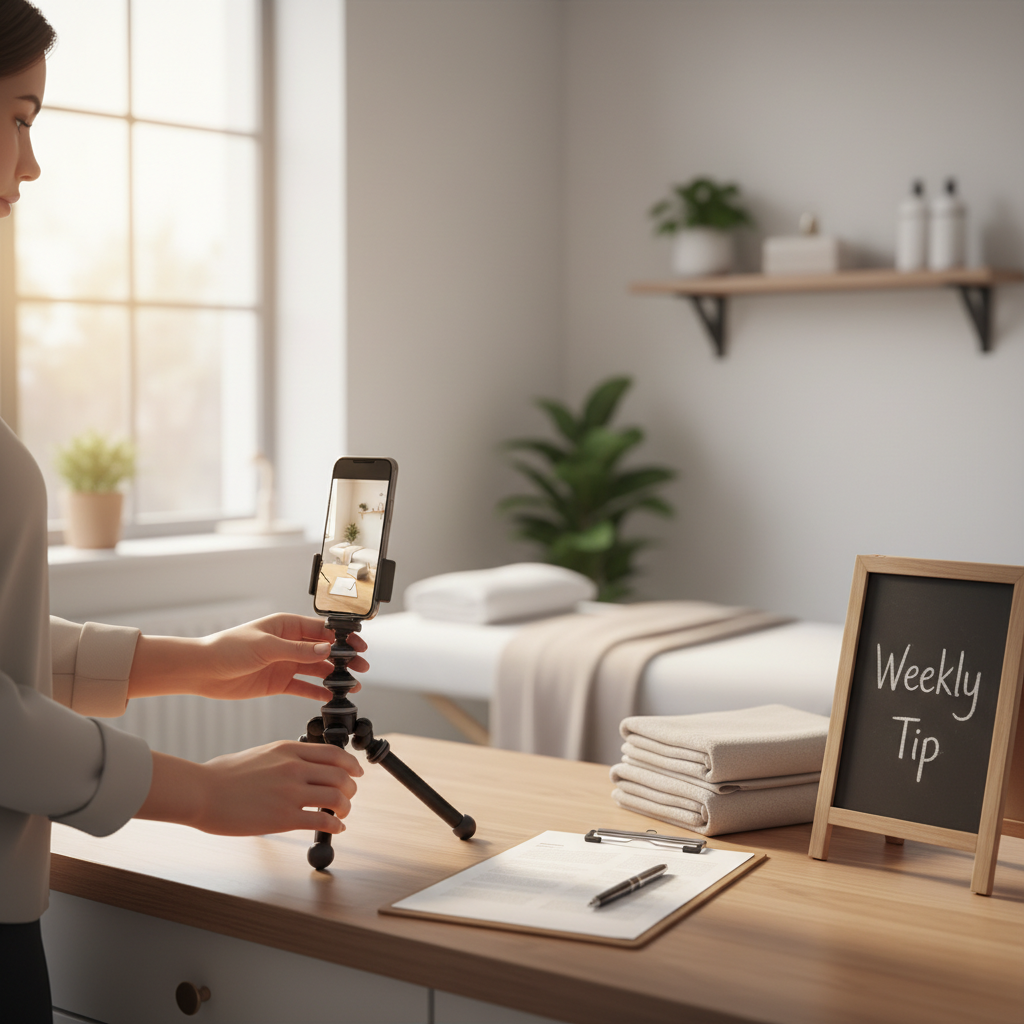
How to Build Local Authority with a Weekly Expert Content Series
Small businesses win when they become the obvious local expert. This playbook gives a step-by-step weekly series you can run for 6–12 weeks, with exact scripts, captions, and a repurpose plan.
6 min read
BrandZilla EditorialReviewed by marketing operators· Updated Jul 24, 2026· 6 min read
Start with the problem in your own words.
You're tired of posting random tips that never bring people through the door. You know you have helpful experience, but you don't know how to turn that into consistent, visible authority that actually leads to bookings or walk-ins.
Posting sporadically or trying to be a one-post-everything shop costs time and trust. Local customers notice patterns: helpful, consistent content beats flashy one-offs when it comes to choosing a nearby business.
This article gives a practical weekly system to run a short-format "expert content series" — one reliable piece each week that positions you as the local authority and feeds a week of posts without guesswork.
The 5-step weekly expert series (repeat each week)
Use this framework for 6–12 weeks. Treat each week like a mini-course on a narrow topic customers care about.
Pick the week's narrow topic (10–15 minutes)
Choose something specific your customers ask about. Examples: "how to stop breads going stale in humid climates" for a bakery, or "what to bring to your first physio appointment" for a clinic.
Narrow beats broad. One question = one week.
Create one anchor piece (30–60 minutes)
Anchor = a 60–90 second video, a 400–600 word blog, or a single PDF tip sheet. This is the source material you reuse all week.
Use a quick structure: Problem (10s), simple answer (30–45s), one quick example or demo (15–30s). End with a soft call to action (CTA) like: “If this helps, call us for a free 10-minute consult.”
Repurpose into 3–5 supporting posts (20–40 minutes)
Pull 3 quotes, one short how-to clip, one before/after photo, and a customer question. Each becomes a distinct social post.
Keep captions short and local: mention neighborhood, nearby landmarks, or how many clients you’ve helped.
Schedule and engage (10–15 minutes weekly)
Schedule posts across the week rather than all at once. Post anchor mid-week, clips early week, social proof later.
Spend 10 minutes the day of to reply to comments and DMs — fast replies build trust.
Track one metric (weekly)
Choose one thing: calls, bookings, email signups, or foot traffic. Track it against the topic weeks. Is “bringing a child’s bike” week yielding more calls? Note it.
Reality check: Most small businesses post 3x then quit. Consistency beats creativity 9 times out of 10.
Why a weekly series beats random posting
Expectation: Locals learn to look for your weekly answer. That repeat exposure builds recall and trust.
Efficiency: One anchor fuels five posts. You save time but look active.
Authority: Focused depth shows you actually know this stuff rather than offering surface-level tips.
Exact templates and scripts you can copy
Use these verbatim the first two months to avoid analyst paralysis.
Anchor video script (60–75 seconds):
Hook (5–8s): “If your [problem], stop doing X — try this instead.”
Explain (30–40s): Give 2 clear steps. Number them. Use plain language.
Example (15–20s): Show one quick demo or customer result.
CTA (5–8s): “Want help? Drop a message or call us at [phone]. We’re in [neighborhood].”
Instagram caption formula (for the anchor post):
Line 1: Short punch hook (same as video hook).
Line 2–3: Two numbered steps.
Line 4: Quick local proof (e.g., “Helped 12 neighbors last month”).
Line 5: CTA (question to invite comments + how to book).
Example caption (coffee shop):
“We keep pastries crisp in our humid summer — here’s how. 1) Store on a rack, not sealed. 2) Use a single sheet of parchment. Helped 9 customers this week. Want one fresh for breakfast? Reply with PICKUP.”
Quick win: Repurpose one customer review into a 3-post mini series this week.
A real mini-example you can copy
Business: Maple Street Physiotherapy, Portland.
Week topic: “What to bring to your first physio appointment.”
Plan and results:
Anchor: 70s video recorded at the clinic on Monday.
Supporting posts: 2x short clips (demonstrating shoes and paperwork), 1x client quote, 1x FAQ post.
Schedule: Clips on Tuesday/Thursday, quote on Friday, anchor mid-week.
Results in 6 weeks: 8 new bookings attributing the clinic’s social posts; 15% increase in first-time patients asking about paperwork. Time spent: ~90 minutes per week to create and schedule.
This is believable and repeatable. Small wins like this compound trust.
Repurpose checklist (use every week)
Anchor video -> two 15–30s clips (show steps or a demo).
Anchor transcript -> 1 short blog or Google My Business post.
Anchor quote -> social image with a local background.
Customer review -> highlight post with a CTA.
FAQ -> quick Q&A story or Reel.
Common mistake: Treating Instagram captions like tweets — context outperforms one-liners for local businesses.
Publishing cadence that keeps you visible without burning out
Week 1–6: Run the weekly series on a single topic area (e.g., onboarding, maintenance, local tips).
Schedule: 3 posts/week minimum (clips, anchor, social proof). Save one weekly 10-minute slot to engage.
After week 6: Review metrics and either repeat a related topic or switch vertical.
Practical shortcut: You can build this system manually — or use BrandZilla to stay consistent without hiring a social media manager.
How to turn posts into real enquiries
Use clear, local CTAs: “Text READY and we’ll hold a slot,” or “Call for a quick 10-minute consult — we’re on Main St.”
Add one conversion point to every anchor: link to booking, phone, or a short form.
Follow-up: If someone comments, move them to a DM within 24 hours and ask one booking question (available days/times).
Scripts to move social replies into bookings
First reply: “Thanks — would mornings or afternoons work better for you?”
If they answer: “Great. We have X on Tue and Y on Thu. Which fits? If neither, I can book a callback.”
If they want more info: “I can send a 2-minute video that answers that — prefer text or email?”
Measurement: keep it stupid-simple
Choose one metric before you start: calls, bookings, or email adds.
Track weekly. After 6 weeks, compare to the 6 weeks before.
If bookings increased by 10%+, keep the series or scale to another topic.
What actually works: A 5-post weekly rhythm built from one anchor piece — not daily improvisation.
FAQs
Q: What if I don't have time to post every week?
A: Run a bi-weekly version using the same anchor + repurpose plan. Spend 60–90 minutes every two weeks and schedule the posts. Next step: block a 90-minute slot on your calendar this week.
Q: Can I reuse old content without looking repetitive?
A: Yes. Update the angle (seasonal detail, local event, recent customer story) and re-run a good anchor every 8–12 weeks. Next step: pick one past post with the most engagement and plan a refreshed version.
Q: Do small businesses actually need a content calendar?
A: Yes — even a one-column weekly calendar reduces decision fatigue and keeps you consistent. Start with one row: topic, anchor type, CTA. Next step: create a 6-week sheet today.
Q: How long before posting consistently actually brings in customers?
A: Expect noticeable local trust gains in 4–8 weeks; measurable booking changes in 6–12 weeks. Next step: pick a single metric and track it for 6 weeks.
Q: Will customers care about a niche topic?
A: If it solves a real local problem they have, yes. Narrow is better. Next step: ask five recent customers what they wish they’d known before visiting.
Steal this template: "We help [audience] [outcome] without [pain]. Here's how →"
Short closing thought
Pick one small question your customers ask three times a week. Run a 6-week weekly expert series on that question, and you'll have a repeatable engine for visibility and trust. If you want a ready-made set of templates and a simple scheduler, BrandZilla keeps this system tidy without overcomplicating it.
The real objections — answered straight, no fluff.
BrandZilla Editorial Team
SMB MarketingContent Strategy
Practical playbooks written and reviewed by people who actually run content programs for small and local businesses — not generic AI output. Every guide is pressure-tested against what real operators do on Instagram, Facebook, LinkedIn and Google.
Used by 1,000+ businessesLast updated Jul 24, 20266 min read
Get weekly content ideas for your business
Join business owners getting practical, ready-to-post BrandZilla content prompts every week. No spam.