

Authority Building

How to Build Local Authority with Practical Long-Form Guides

Small businesses get seen when they solve a local customer's specific problem. This playbook shows how to create long-form guides that build trust, earn local search, and convert passersby into paying customers.

6 min read
BrandZillaBrandZilla EditorialReviewed by marketing operators
How to Build Local Authority with Practical Long-Form Guides

Local business owners often say: “I post sometimes, but nothing really changes.”

You’re right to be skeptical. Random posts and discounts don't build trust or search visibility. Customers looking for a solution—"best carpet cleaner for pet stains near me"—want a clear answer. They want proof you know the local problem and how to fix it.

This guide is a hands-on playbook for turning one long-form, locally focused guide into a weekly content engine and a steady source of local leads. No fluff, just exact steps, copy-paste templates, and a small example you can copy this week.

Why a long-form local guide beats 10 one-off posts

Short posts get likes. Long-form guides get found.

  • A 1,000–1,500 word guide answers search queries, shows expertise, and lives on your website where it converts visitors.
  • One anchor guide can be the source for 5–10 social posts, an email, an FAQ section, and a local service page update.
  • Search engines and local customers favor depth and specificity: “how to stop dryer lint fires in Springfield” beats “dryer safety” as a target.

Reality check: Most small businesses post 3x then quit. Consistency beats creativity 9 times out of 10.

The 5-step framework to create a local authority guide (90–120 minutes to draft)

  1. Pick one specific local problem (10 minutes)
  • Use support questions, Google Autocomplete, or the last 10 customer calls to find the exact wording customers use.
  • Aim for a long-tail topic: add location, symptom, or product. Example: “how to fix burst sprinkler heads in [neighborhood]” not “sprinkler repair.”
  1. Outline the guide with customer-first headings (15 minutes)
  • Quick intro: what the problem looks like and who should read this.
  • Quick fix (if safe): immediate steps they can take now.
  • Why it happens: short explanation to show expertise.
  • What a professional does: services, time, cost ranges.
  • How to prevent it: simple tips and maintenance checklist.
  • Local specifics: permit rules, soil or climate notes, typical prices in your area.
  • Call-to-action: clear next steps (call, book online, free estimate).
  1. Draft the guide (45–60 minutes)
  • Write in plain language; avoid jargon. Aim 1,000–1,500 words.
  • Include one local detail: neighborhood name, typical house type, or a nearby landmark.
  • Use 2–3 customer quotes or micro-testimonials inline.
  1. Add local trust signals (10 minutes)
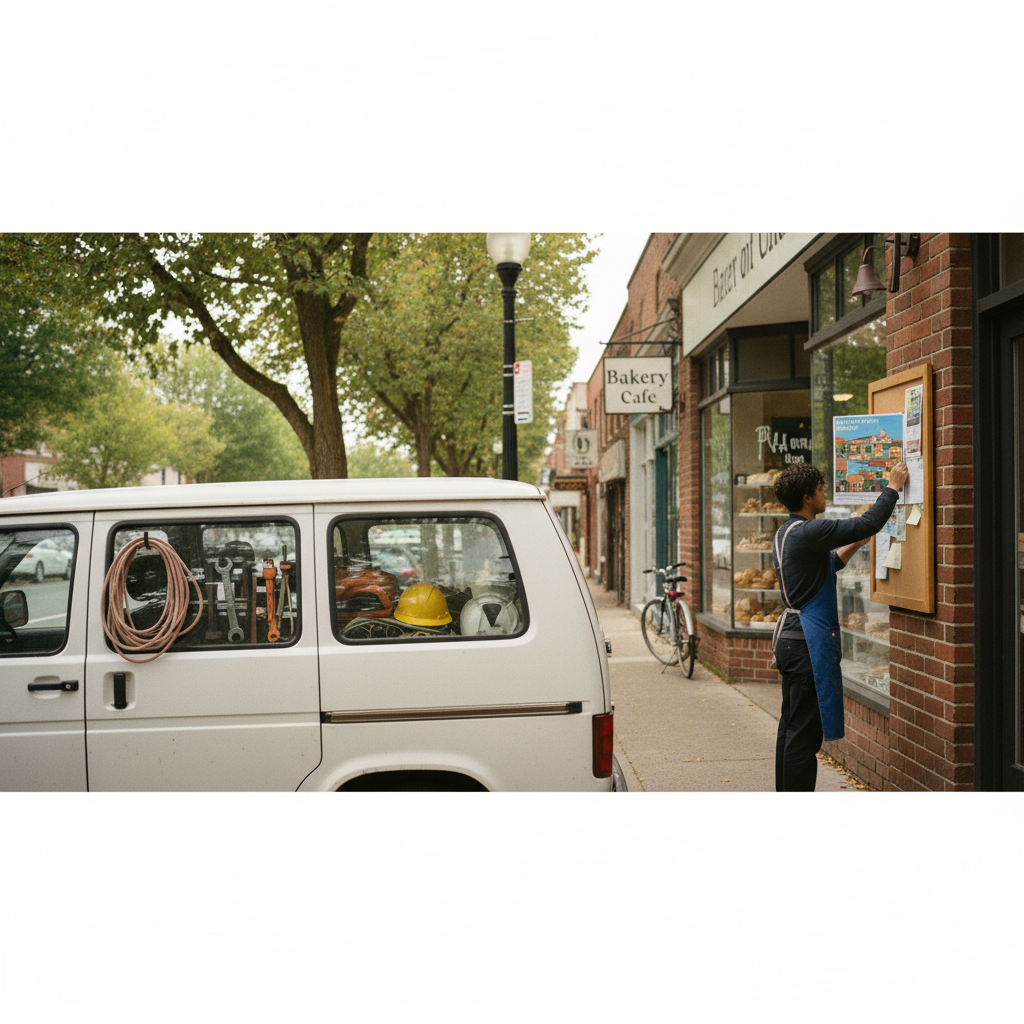
  • Include a nearby photo (shop, van, or team at a local job) with a short caption.
  • Add a small “We’ve helped X neighbors” line or a recent review snippet.
  • Insert a simple pricing band: “Most jobs here: $150–$375.” Customers dislike surprises.
  1. Publish and map content to channels (10 minutes)
  • Publish on a dedicated URL like /guides/how-to-fix-burst-sprinkler-heads-[town].
  • Create five social posts from the guide (see templates below).
  • Add the guide to local SEO: internal link from service pages and a schema-enhanced FAQ box if possible.

Quick win: Repurpose one customer review into a 3-post mini series this week.

Copy-paste templates (use these verbatim and tweak the local details)

Guide intro (40–60 words):

"If your sprinkler head broke and water is gushing near the sidewalk, this guide walks you through a safe temporary fix, how professionals repair it, and what it costs in [Town]. If the leak is large or near electrical outlets, call us now at [phone]."

Immediate steps block (short bullet list):

  • Turn off the sprinkler controller or main valve.
  • Cap or wrap the broken head with duct tape as a temporary measure.
  • Keep pets and children away from the wet area.
  • Take a photo and send it to your local pro for a quick estimate.

Service pitch (2–3 lines):

"We repair or replace sprinkler heads in [Town]. Typical on-site time: 30–60 minutes. Typical cost range: $75–$250 depending on parts and access. Book a same-day spot here [booking link]."

Social post templates (5 posts from one guide):

  1. Problem post: "Water pooling near your sidewalk? It’s often a broken sprinkler head. Here’s a quick safety step → [link]"
  2. How-to clip: "Quick fix: turn off main, cap the head, take a photo. More on what to do next → [link]"
  3. Trust post: "Last week we fixed 7 burst heads on Maple Ave — same-day visits available. See what we do → [link]"
  4. FAQ snippet: "Do I need a permit? For most small repairs no — larger rewiring yes. Read the local rules → [link]"
  5. Preventative tip: "Schedule spring tune-up to avoid bursts. Book now and save $20 → [link]"

Common mistake: Treating Instagram captions like tweets — context outperforms one-liners for local businesses.

Mini-example you can copy this week

Maple Street Plumbing, a 3-person company in Portland, published a 1,200-word guide titled “How to Stop Slow Bathroom Drips in Southeast Portland.”

  • Week 0: Guide published and linked from their service page.
  • Weeks 1–4: Five scheduled posts (two Facebook, three Instagram) pointing to the guide.
  • Results in 12 weeks: organic search clicks for the guide grew from 2/week to 38/week. Phone calls from the article increased from 1/month to 8/month. New monthly revenue attributed: approximately $4,200.

Why it worked: the guide answered a common, specific search and included clear pricing and next steps.

What actually works: A 5-post weekly rhythm built from one anchor piece — not daily improvisation.

How to use the guide as a weekly content engine (exact 5-post per week plan)

  • Day 1: Anchor post — share the guide link with 2-line summary and a CTA.
  • Day 2: Behind-the-scenes photo from a similar job with a one-sentence tip.
  • Day 3: Short Q&A pulled from the guide’s FAQ section.
  • Day 4: Customer quote or quick before/after image.
  • Day 5: Preventative tip with a service offer.

Reuse these five assets across Facebook and Instagram Stories. Pin the anchor post on Facebook and add the guide link to your Instagram bio for that week.

Steal this template: "We help [audience] [outcome] without [pain]. Here's how →"

Quick SEO and local linking checklist (5 minutes)

  • Title tag: include the problem and town, e.g., “How to Stop Bathroom Drips — Southeast Portland.”
  • URL: short, descriptive, includes town.
  • Meta description: 140–155 characters, promises the immediate fix and a CTA.
  • Internal links: link from related service pages and the homepage.
  • Local backlinks: ask a neighborhood association or supplier to link to the guide.

Practical shortcut: You can build this system manually — or use BrandZilla to stay consistent without hiring a social media manager.

Measuring success (what to watch for)

Track these KPIs for 12 weeks after publishing:

  • Organic search clicks to the guide (goal: steady increase week-over-week).
  • Direct phone calls or booked jobs mentioning the guide (goal: +3–6 per month for niche topics).
  • Social engagement and click-through rate on posts that link to the guide.
  • Time on page and bounce rate (goal: time on page >2 minutes for long-form guides).

If after 8–12 weeks you get traffic but no calls, revise the CTA: make pricing clearer, add a special local offer, or add a click-to-call button.

One-person workflow (repeatable in 90 minutes/week)

  • Monday: Draft or update one guide (90 minutes).
  • Tuesday: Break guide into five social assets (30 minutes).
  • Wednesday: Schedule posts and add the guide link to website nav or service pages (30 minutes).
  • Thursday: Respond to comments and messages (20–30 minutes).
  • Friday: Quick metrics check and tweak copy for next week (15 minutes).

Final notes and guardrails

  • Don’t try to cover everything in one guide. Narrow beats broad.
  • Always add a clear next step: phone, booking link, or free estimate. No vague CTAs.
  • Keep pricing transparent. Customers trust clarity and will call more.

If this feels like a lot, start with one guide this week and reuse the templates above. This system turns a single useful web page into your weekly content calendar and a reliable local lead source.

If you want a ready-made checklist and calendar that follows this playbook, BrandZilla has a template you can adapt to your schedule.

Thanks for reading—post one helpful guide this week and watch how much easier it is to be found for the things you actually do.

#authority-building#local-marketing#content-strategy#small-business#local-seo

Questions business owners actually ask

The real objections — answered straight, no fluff.

BrandZilla

BrandZilla Editorial Team

SMB MarketingContent Strategy

Practical playbooks written and reviewed by people who actually run content programs for small and local businesses — not generic AI output. Every guide is pressure-tested against what real operators do on Instagram, Facebook, LinkedIn and Google.

Used by 1,000+ businessesLast updated Aug 17, 20266 min read

Get weekly content ideas for your business

Join business owners getting practical, ready-to-post BrandZilla content prompts every week. No spam.

No spam. Unsubscribe anytime.

Related articles