How to Run a 14‑Day Local Social Campaign That Actually Books Customers
A simple, play-by-play 14-day campaign you can run with staff phones and a $150 ad boost. Includes exact captions, stories, and follow-up scripts designed to convert local followers into bookings.
7 min read
BrandZilla EditorialReviewed by marketing operators· Updated Jul 19, 2026· 7 min read
I need a simple plan to promote a new service and get bookings in two weeks.
I don't want vague advice or a month-long strategy. I want a short, repeatable campaign that a team of two can run between shifts — with proof it moves the needle.
If that sounds like you, this is a step-by-step playbook for a 14-day local social campaign built specifically to drive calls and bookings. No creative heroics, just predictable daily actions and copy you can paste.
Campaign overview — what this 14-day sprint does
This is a tight promotional campaign focused on one offer (service, product, class). It combines organic posts, short-form video, targeted boosted posts, and direct-response follow-ups.
Goals:
Pick one clear offer and a measurable goal (calls, bookings, or email signups).
Run 14 days of coordinated content designed to push the audience to that single action.
Use one small paid boost mid-campaign to widen reach.
Why 14 days? Two weeks keeps momentum without burning the audience, gives time for tests, and fits typical decision cycles for local purchases.
Reality check: Most small businesses post 3x then quit. Consistency beats creativity 9 times out of 10.
Step 1 — Pick the offer and the single measurable action (Day 0)
Be specific. Replace "discount" or "special" with a concrete, limited offer.
Offer example: "$49 20-minute express dental clean for new patients — valid for bookings before May 15."
Measurable action: "Book using this short link" or "Call this number and say 'SPRING49'."
Numbers matter. A good target for a small local campaign: 8–15 bookings in 14 days. If your typical booking value is $80, that's $640–$1,200 in new revenue — measurable and motivating.
Step 2 — The 14-day content plan (what to post, when)
This plan assumes two quick pieces of content per day (one feed post or reel + one story or short clip) and one small paid boost around day 5–8.
Week 1 (Days 1–7): awareness + eligibility
Day 1 — Anchor post: 45–60s reel or carousel explaining the offer and who it’s for.
Day 2 — Social proof: customer photo or short testimonial clip.
Day 3 — Behind-the-scenes: staff prepping, safety, or the process (30s).
Day 4 — FAQ post: 3 quick answers to common questions.
Day 5 — Benefit explainer: what changes for customers after they buy.
Day 6 — Reminder + special detail (limited spots).
Day 7 — Live Q&A or 30s AMA in stories.
Week 2 (Days 8–14): urgency + conversion
Day 8 — Boosted post with anchor creative (small budget, see section below).
Day 9 — Short customer clip or before/after.
Day 10 — FAQ: common objection and short rebuttal (use a staff member).
Day 11 — Time-limited urgency post ("Only X spots left").
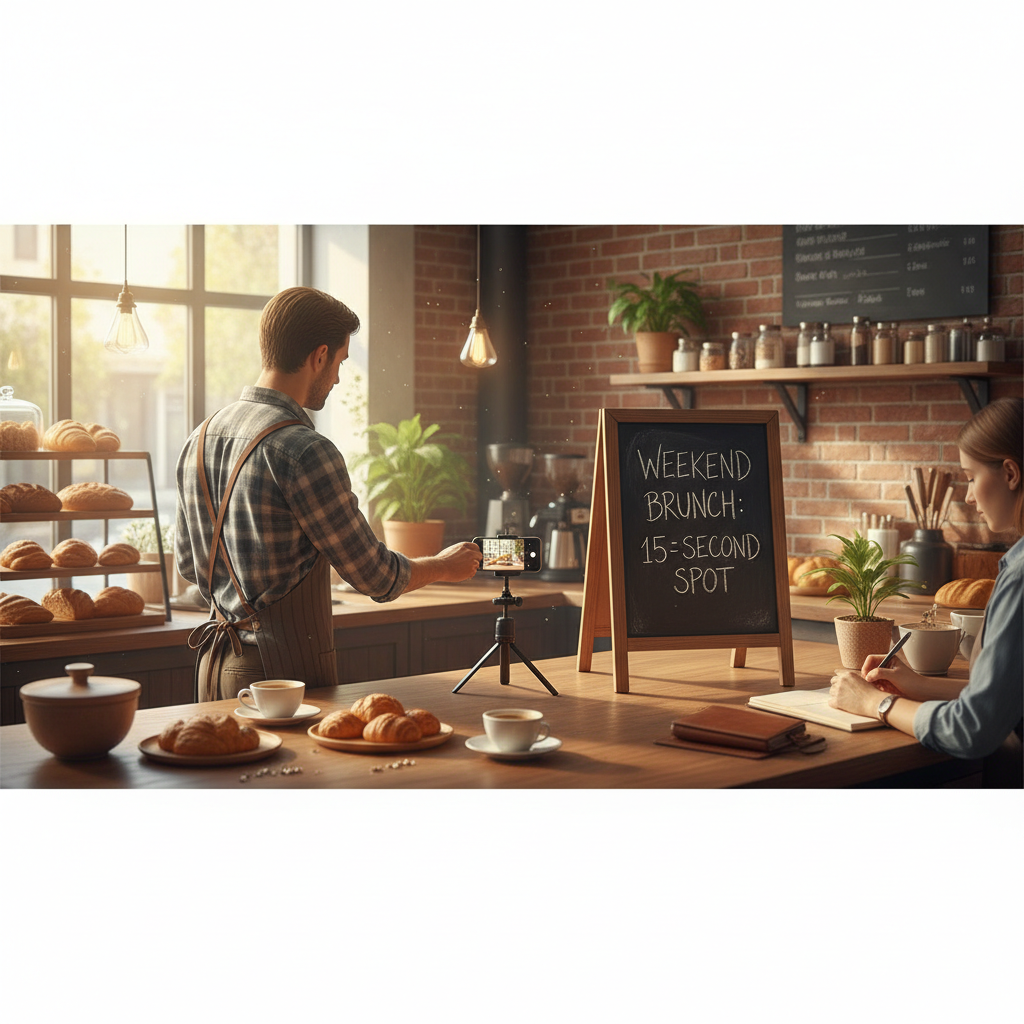
Day 12 — Direct booking walkthrough (screen-record how to book in 20s).
Day 13 — Staff pick — why they recommend this offer.
Day 14 — Last call + social proof and clear CTA.
Each day: a one-line story reminding people how to book (link sticker or phone number).
Quick win: Repurpose one customer review into a 3-post mini series this week.
Exact copy — paste-and-use templates
Use these for captions and stories. Swap the bracketed text.
Anchor reel caption (Day 1):
"New here? We’re offering [offer] for first-timers — only available until [date]. Book online or call [phone]. Limited spots. Book now → [short link]"
Testimonial post (Day 2):
"'I couldn't believe the results — my [benefit].' — [First name], [neighborhood]. New customers can get [offer] through [date]. Book → [short link]"
FAQ caption (Day 4):
"Q: [common question]? A: [short answer]. Want a slot? Call [phone] and say '[code]' or book → [link]"
Urgency post (Day 11):
"Only [number] slots left for [offer]. Book before [deadline] or they're gone. Book here → [link]"
DM follow-up script (when someone comments or messages):
"Thanks, [first name]! We’ve got a few spots left for [offer]. Would you prefer mornings or evenings? I can hold one while you decide."
Phone script (short):
"Hi, this is [staff name] at [business]. We have the [offer] and a slot on [date]. Would you like me to secure that for you now?"
Paid boost strategy (small but tactical)
Budget: $50–$200 depending on town size. Target: 3–5-mile radius, interests related to the service, and people who follow your page.
When to boost: Day 8 (right after the social proof and FAQs). Creative: the anchor reel or a short before/after clip. CTA: Send Message or Book Now (use the platform that gives you the booking link).
Measure: track link clicks and direct messages. Expect a 1–3% click-through rate on boosted local posts; adjust budget if early numbers are poor.
Steal this template: "We help [audience] [outcome] without [pain]. Here's how →"
How to handle replies and convert fast
Turn every comment into a conversation. Assign one person to check DMs and comments twice daily. Quick responses close sales.
Priority flow:
Comment: reply publicly then send a DM asking a scheduling question.
DM: if they ask price or availability, offer times and give a single link to book.
Call: confirm slot, take deposit if needed.
Tracking: use a shared spreadsheet with columns for name, contact, source (IG/FB/boost), preferred times, and status (pending/booked). That one sheet keeps you from losing leads.
Mini-example: Neighborhood hair salon (real numbers)
Goal: 12 new color appointments in 14 days. Offer: $70 root touch-up for new clients (normally $95). Budget: $120 boost.
Plan executed:
Day 1 reel: stylist shows quick 40s process + before/after. Caption includes short link.
Day 5 testimonial: happy customer photo with quote.
Day 8 boost: anchor reel to 3-mile radius; $60, goal 60 link clicks.
Staff checks DMs morning and evening.
Result target: 12 bookings × $70 = $840 revenue. Booking rate required: ~20% of link clicks. If boost brings 60 clicks and organic adds 30, total 90 clicks → 20% = 18 bookings (buffer built-in).
Local business example: A bakery in Brooklyn moved from 2 walk-ins/day to 11 by posting one behind-the-counter reel each morning.
Measurement — what to watch, what to change
Metrics to track daily:
Impressions and reach for boosted post.
Link clicks and direct messages.
Number of bookings attributed to the campaign.
If bookings are low after day 7:
Swap creative (use more social proof).
Simplify the CTA (phone number in every caption).
Increase boost audience slightly but keep the radius local.
If DMs are slow, add a "Book now" story sticker with a countdown.
Common mistake: Treating Instagram captions like tweets — context outperforms one-liners for local businesses.
Tools and checklists for a 2-person team
What you actually need:
Phone with decent camera (staff phone is fine).
One short link (use a link shortener or booking page).
A shared Google Sheet for leads.
Simple scheduler (native Instagram/Facebook schedule or a free calendar).
Daily checklist for the person on posts:
Post feed reel/carousel by 10am.
Post stories with booking link by 1pm and 6pm.
Check DMs/comments at 11am and 4pm and record leads.
Practical shortcut: You can build this system manually — or use BrandZilla to stay consistent without hiring a social media manager.
Repeatability — how to turn this into a monthly playbook
Run one 14-day campaign per month focused on a single service or seasonal push. Between campaigns, keep a lighter presence (2–3 stories per week) and gather fresh social proof to use in the next sprint.
A simple monthly rhythm:
Week A: Campaign 1 (14 days)
Week B: Low-pressure posts and testimonials
Week C: Campaign 2 (14 days)
Week D: Review results and collect content
Final operational tips (what small teams miss)
Hold one 20-minute planning huddle two days before Day 1.
Pre-write captions and store them in a notes app so posting is simple.
Always end captions with one clear action: call, message, or book link.
If you run this twice and track outcomes, you'll know what creative works and what to skip next time.
A short thought to finish: focused campaigns beat random posting. If you give people a clear reason and a simple way to act, small budgets and staff time produce real bookings.
Soft note if you want a faster start: BrandZilla offers ready-made campaign kits for local businesses, but the system above will work with just a phone and one reliable staff member.
The real objections — answered straight, no fluff.
BrandZilla Editorial Team
SMB MarketingContent Strategy
Practical playbooks written and reviewed by people who actually run content programs for small and local businesses — not generic AI output. Every guide is pressure-tested against what real operators do on Instagram, Facebook, LinkedIn and Google.
Used by 1,000+ businessesLast updated Jul 19, 20267 min read
Get weekly content ideas for your business
Join business owners getting practical, ready-to-post BrandZilla content prompts every week. No spam.